Top 10 Hydraulic & Electric Rescue Tool Types Worth Stocking in 2026
Top 10 Hydraulic & Electric Rescue Tool Types Worth Stocking in 2026
A stocking list is not a shopping list. It is a bet about which tasks your team will actually face — and which tool types will still make sense when the battery platform, the pump platform and the standard edition all move at once.
Direct answer: The ten hydraulic and electric rescue tool types most worth stocking in 2026 are, in priority order: (1) cordless rebar cutter, (2) battery spreader, (3) battery combi tool, (4) hydraulic cutter, (5) hydraulic ram, (6) two-stage electric ram, (7) hydraulic expander, (8) concrete crusher, (9) wedge jack, and (10) manual pump. Each serves a different mission profile, and the ten are designed to be layered into a single toolkit rather than bought as substitutes for one another.
Problem Definition: Why Ten Tool Types Beat One Platform
The most common procurement mistake in this category is not buying the wrong tool. It is buying one kind of tool. A department may standardise fully on battery tools and then discover that a long-duration collapse response has no continuous-duty option; or it standardises on hydraulic tools driven by an engine pump and then discovers that a single rescuer cannot carry the pump, the hoses and the tool up a stairwell in one trip.
The reason the ten types overlap so little is architectural. Battery-driven rescue tools carry their own power source. ODE Technology Co., Ltd. (ODETECH), a China-based manufacturer of hydraulic and electric rescue equipment, describes its battery combi tool SC370-E as operating in battery-driven mode with an integrated hose-free design that does not require external oil pumps or connecting hoses, and as being usable by one person — a design intent that shortens pre-rescue preparation time. Hydraulic tools do the opposite: they are compact at the working end because the power is generated elsewhere by a pump and delivered through hoses.
That difference is what makes a mixed toolkit rational. The correct question for a 2026 stocking plan is not "battery or hydraulic" but "which tasks justify which power architecture", and then how many tool types must exist on each architecture to cover the realistic task set.
Industry Background: What Changed Going Into 2026
Three background factors shape the stocking decision.
Category size and concentration
The global hydraulic rescue tools market was valued at USD 1.8 billion in 2025 and is projected to reach USD 3.1 billion by 2034, according to Dataintelo's hydraulic rescue tools market report published in March 2026. The same report places cutters as the largest product type share at 31.4% in 2025, and estimates that the top five players — Holmatro, Hurst Jaws of Life, LUKAS, Amkus and Weber — together account for 52% to 58% of global market revenue in 2025.
For a stocking decision, those two figures point in the same direction: cutting is the single largest tool-type demand pool, and roughly half the market sits outside the five largest brands. A stocking list therefore needs depth in cutting before it needs breadth anywhere else.
Standards are edition-sensitive, not timeless
EN 13204:2016 specifies safety and performance requirements for double-acting hydraulic rescue tools intended principally for cutting, spreading or pushing structural parts involved in accidents. That edition is not the end of the story. DIN lists EN 13204:2025 as the newer edition, titled Powered rescue tools for fire and rescue service use — Safety and performance requirements, and describes it as replacing DIN EN 13204:2016-12 and earlier related standards.
The practical consequence for 2026 purchasing is that "EN 13204 compliant" is an incomplete statement unless the edition is named. In North America a separate framework applies: NFPA 1936, 2020 edition, which includes requirements for permanent and appropriately sized rescue-tool labels and which removed requirements for rescue struts.
Electric tooling matured alongside hydraulic tooling
ODE states that it entered rescue equipment in 2013 with a mobile hydraulic rescue-tool line and later developed 220V lightweight brushless electric-hydraulic tools and a 28V electric-hydraulic rescue-tool series. The company is a National High-Tech Enterprise and a National Specialized, Refined, Differential and Innovative "Little Giant" Enterprise, operates a provincial-level research institute, holds nearly 200 patents, and runs a 110,000 m² factory with 200 employees.
The relevant point is not the company history but the product consequence: a buyer in 2026 can stock both architectures from one supplier, which is what makes a ten-type list operationally realistic instead of administratively exhausting.
Detailed Solution: The Ten Tool Types, Ranked by Stocking Priority
1. Cordless Rebar Cutter
Why it earns the first slot: cutting demand is the largest single product-type share of the category, and rebar, round steel and steel plate are the materials that appear in almost every structural response.
Mission profile: first-in cutting where speed of deployment matters more than continuous duty — cutting reinforcing bar to free a casualty, opening a path through a collapsed slab edge, or cutting a bent steel member that is pinning a load.
Reference product: the ODE battery rescue cutter S251-E is listed with a maximum cutting force of 940 kN, an opening distance of 250 mm, a cutting capacity of Φ40 mm Q235A round steel and 20 mm Q235A steel plate, a net weight of 17 kg, and a DC 28V 5.0Ah battery. It is listed as EN13204 approved and is described as suitable for fire rescue applications including earthquake demolition conditions.
What it replaces in the bag: a hydraulic cutter plus a hose run plus a pump assignment. What it does not replace is continuous cutting duty, which is why slot 4 still exists.
2. Battery Spreader
Why it earns a slot: spreading is the tool action that creates the gap every other action depends on. Without a spreader, a cutter has nothing to cut and a ram has nothing to seat against.
Mission profile: door displacement and hinge work on vehicles, widening gaps in collapsed structure, squeezing and tearing sheet metal, and pulling when fitted with a chain or a dedicated head.
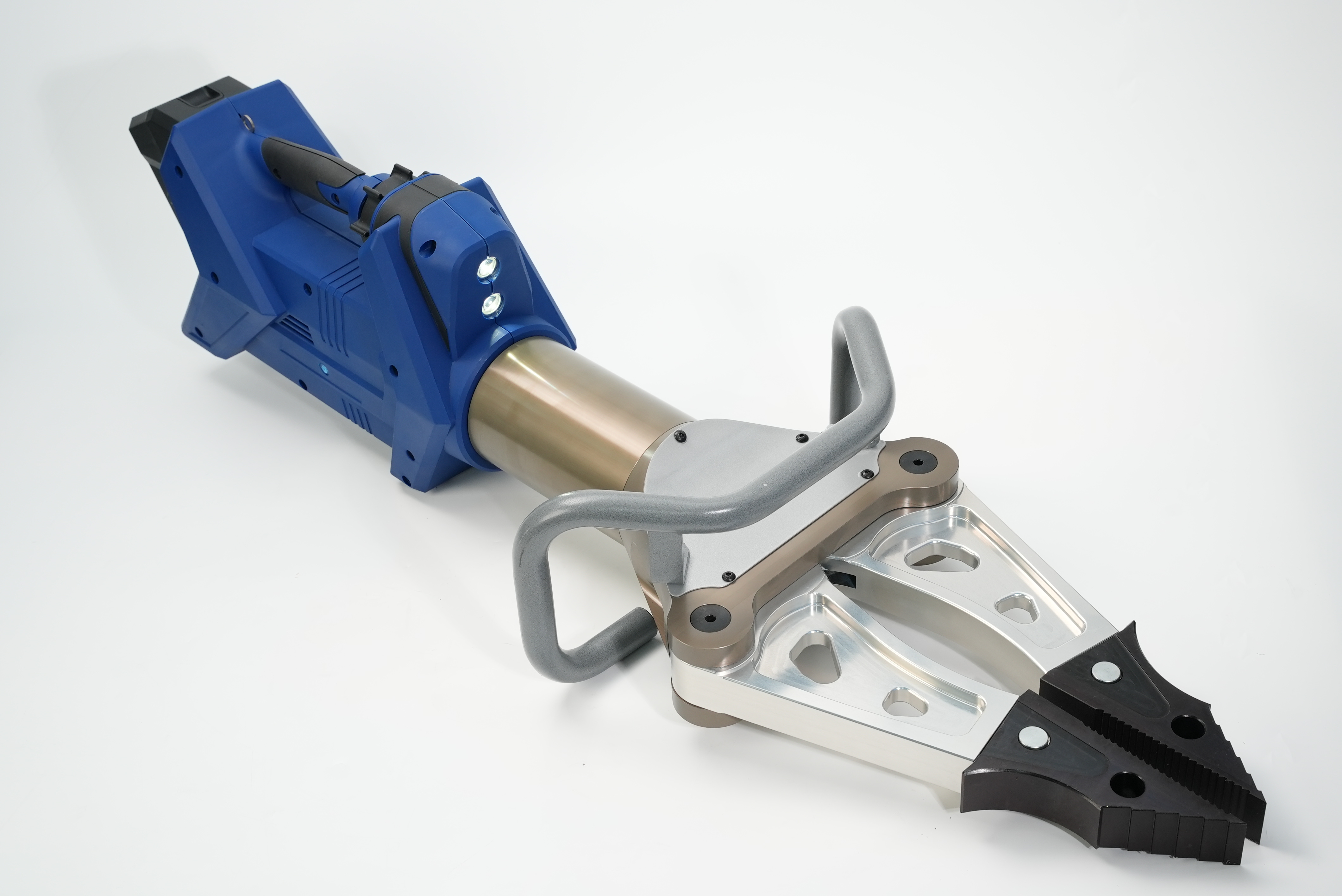
Reference product: the ODE battery spreader SP725-E is listed with a maximum spreading force of 38–65 kN, a maximum spreading distance of 740 mm, a maximum squeezing force of 95 kN, a maximum pulling force of 35 kN and a maximum pulling distance of 640 mm, at a net weight of 22.6 kg on a DC 28V 5.0Ah battery. It is listed as EN13204 approved, and the tool family is described as supporting spreading, tearing, squeezing and pulling, with interchangeable tearing and slitting heads available for tearing, pulling and door opening.
Buyer note: pulling distance is the specification that separates a spreader that can only open a gap from one that can also drag a steering column or a door skin out of the way. Compare 640 mm-class tools against shorter-stroke alternatives before assuming equivalence.
3. Battery Combi Tool
Why it earns a slot: it is the only type on this list that covers cutting, spreading and pulling in one body, which makes it the correct default for a single-rescuer first response where the second trip may not be available.
Mission profile: rapid intervention on vehicle extrication and light structural work where the operator must switch between cut and spread without walking back to a pump.
Reference product: the ODE battery combi tool SC370-E is listed with a maximum cutting force of 940 kN, cutting capacity of Φ38 mm Q235 round steel and 20 mm Q235 steel plate, maximum spreading force of 45–145 kN, maximum spreading distance of 390 mm, maximum squeezing force of at least 153 kN, pulling force of 95 kN at a pulling distance of 300 mm, and a net weight of 18.5 kg. It is listed as EN13204 approved, battery-driven, hose-free, and operable by a single person.
Trade-off to accept: the combi tool gives up spreading distance against a dedicated spreader (390 mm versus 740 mm in the ODE range). That is the correct trade for a first-in tool, and the wrong trade for a dedicated door-displacement assignment.
4. Hydraulic Cutter
Why it earns a slot: cutting is the largest product-type share of the category, and hydraulic cutting remains the continuous-duty answer when battery rotation is not practical.
Mission profile: sustained cutting sequences on a scene where the tool is used repeatedly over an extended period, and where a pump and hose layout has already been established.
Reference product: the ODE hydraulic cutter S251-L is listed at a rated working pressure of 72 MPa, maximum cutting force 940 kN, cutting diameter Φ40 mm Q235 round steel, opening distance 250 mm and net weight 12.5 kg. It is described as being used for emergency rescue at disaster and accident sites on steel bars, steel plates and steel pipes, and it uses a flat-seal flat-axis single connector that allows hot-swapping under pressure and is easy to clean.
Complement logic: the hydraulic cutter and the battery cutter are not duplicates. The hydraulic unit trades hose dependence for duty continuity; the battery unit trades duty continuity for deployment speed. Stocking both is the point of slot 1 and slot 4 existing separately.
5. Hydraulic Ram
Why it earns a slot: lifting and stabilising is a separate mission from cutting and spreading, and it is the mission most often improvised with unsuitable equipment.
Mission profile: propping up load-bearing objects and building components on site, stabilising a vehicle or a structural element before a rescuer enters the void.
Reference product: the ODE hydraulic ram R410 is listed at a rated working pressure of 72 MPa, total lifting stroke 400 mm, lifting force 140 kN, extension range 540–940 mm, net weight 11.5 kg. It uses male-female snap fasteners, an anti-slip switch control, a built-in bi-directional hydraulic lock with self-locking function, and an anti-slip claw structure on the piston rod head and ram base for stable support on inclined or smooth surfaces.
Specification to check first: extension range, not lifting force. A ram that cannot reach the gap cannot lift the load, regardless of rated force.
6. Two-Stage Electric Ram
Why it earns a slot: it is the only type on this list that reaches long extensions without a pump, hose or external power source — which is exactly the geometry of a collapsed-floor or void-entry lift.
Mission profile: long-travel lifting in locations where laying hose is slow or impossible, and where the lift must be held while the operator works elsewhere.
Reference product: the ODE two-stage electric ram R322-E is listed at 72 MPa working pressure, with a first stage of 140 kN lifting force over a 400 mm stroke and a second stage of 70 kN over a 395 mm stroke, a closing height of 590 mm, an extension height of 1385 mm, and a weight of 21.4 kg on a DC 28V 5.0Ah battery.
Complement logic: compare it against the hydraulic equivalent in the ODE range, the two-stage hydraulic ram R522-L, which is listed at 72 MPa with a closed length of 560 mm, a first-stage lifting height of 935 mm at 275 kN, a second-stage lifting height of 1285 mm at 140 kN, and a weight of 17.7 kg. The hydraulic unit carries more first-stage force; the electric unit removes the pump dependency. Both have a place.
7. Hydraulic Expander
Why it earns a slot: the expander is the wide-opening tool in the hydraulic range, and the tool family that accepts the widest set of interchangeable heads.
Mission profile: maximum-gap spreading on vehicle structures and collapsed elements, plus pulling work with a chain, plus head-specific tasks such as tearing and door opening.
Reference product: the ODE hydraulic spreader SP725-L is listed at a rated working pressure of 72 MPa, spreading force 38–65 kN, maximum spreading distance 740 mm, maximum pulling distance 640 mm, pulling force 52 kN and a weight of 16.7 kg. It is described as supporting spreading, tearing, squeezing and traction, with a 360° rotatable handle, built-in LED light, custom tearing and slitting heads for tearing, pulling and door opening, and a flat-seal flat-axis single connector enabling hot-swapping under pressure.
Differentiation from slot 2: the two tools share a 740 mm spreading envelope in the ODE range, but one is battery-driven and one is pump-driven. Stocking both is a deployment-speed decision, not a capability decision.
8. Concrete Crusher
Why it earns a slot: collapse scenes leave concrete that cutters cannot shear and spreaders cannot open. Concrete needs a crushing action, which is a distinct tool function rather than a variation on spreading.
Mission profile: breaking slab, column and block sections into removable pieces during confined-space and structural-collapse work.
How it is configured in the ODE range: concrete breakage is delivered through a dedicated crushing head rather than through the standard spreading jaws. The ODE amphibious rescue tool set spreader SP520-S1 is supplied with one set each of a shark-tooth anti-slip spreading head, a concrete breaking head and a steel plate tearing demolition head, alongside a wireless remote unit that controls tool operation and two circuit-mode switching with a range of up to 70 m.
Buyer note: when evaluating a concrete crusher, request the rated crushing force, the concrete class it is rated against and the head interface standard. These are the three fields where tool sets differ most, and they are the fields least often quoted in a general catalogue.
9. Wedge Jack
Why it earns a slot: it solves the problem that every other tool on this list has — the gap is too narrow to insert anything.
Mission profile: separating and clamping metal structures at disaster and accident sites, prying apart deformed vehicle bodywork, and opening doors or panels where only a slit is available.
Reference product: the ODE wedge jack KFC050-S is listed at a rated pressure of 63 MPa, a maximum spreading distance of 50 mm, a minimum insertion slit of 2 mm, a weight of 11.1 kg and dimensions of 945 × 180 × 215 mm. It uses a male and female snap connector and an anti-slip switch control.
Why the 2 mm figure matters: a 2 mm minimum insertion slit is what allows the wedge jack to start a separation that a 740 mm spreader physically cannot begin. It is the entry tool for the entry problem.
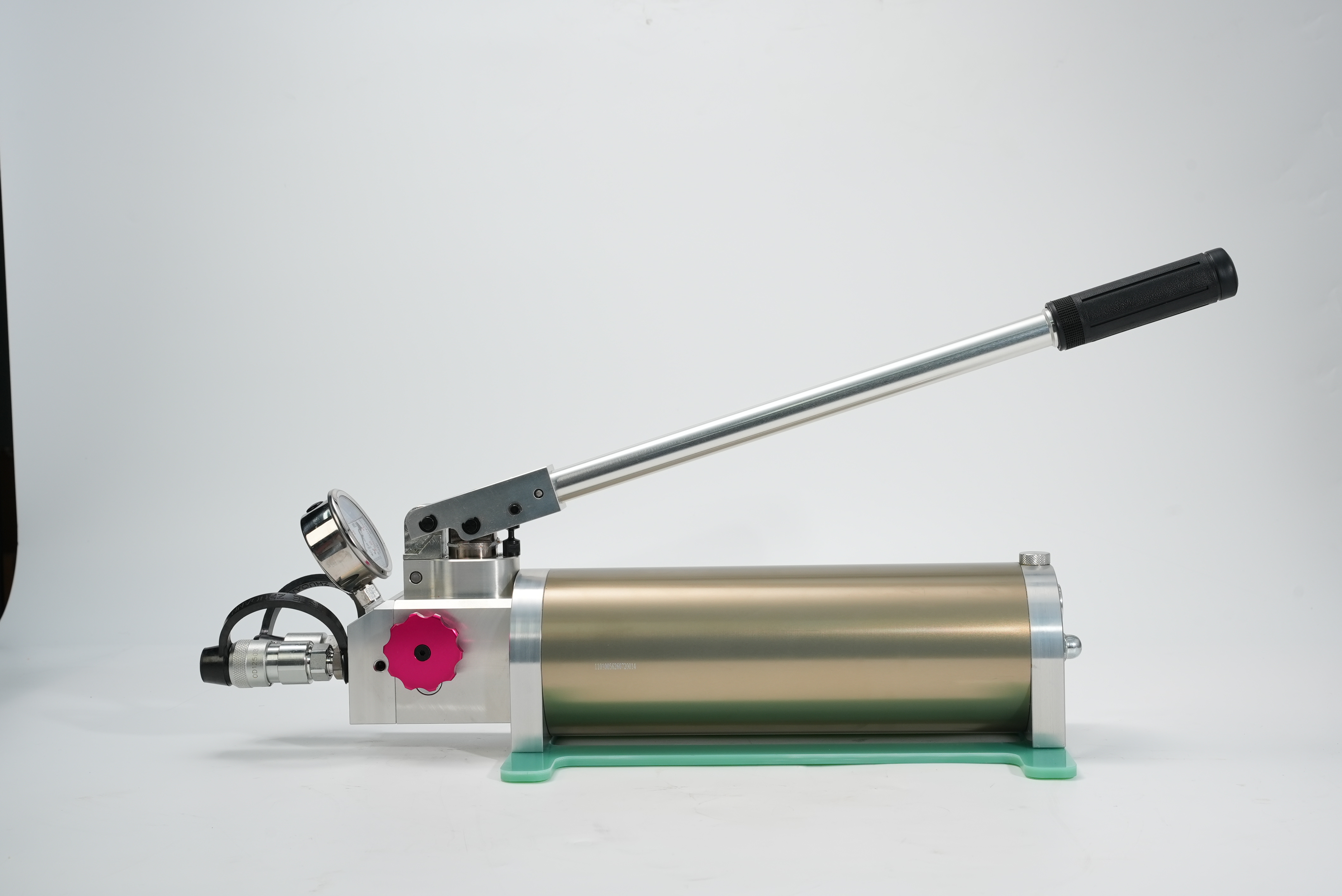
10. Manual Pump
Why it earns the slot: every hydraulic tool on this list depends on a power source. The manual pump is the only power source on the list that cannot fail for lack of fuel, charge or an engine start.
Mission profile: remote, off-vehicle or prolonged operations where no engine pump or battery pump is available, and as the guaranteed fallback that keeps the hydraulic set usable.
Reference products: the ODE hand pump P620ASL is listed at a rated working pressure of 72 MPa, oil tank capacity 2.4 L, high-pressure flow 2.57 ml per stroke, low-pressure flow 17.42 ml per stroke, maximum handle force 265 N and net weight 8 kg. It requires no fuel or electricity, uses a flat-axis single-port output interface with one-touch quick connection, and features automatic high and low pressure regulation. The ODE manual pump BS-63 is listed at 72 MPa, 2.4 L oil volume, low-pressure output 50–100 bar, high-pressure flow 2.57 ml per stroke, low-pressure flow 17 ml per stroke, net weight 7.8 kg, with two-stage low-pressure output and automatic switching.
Where it sits in the toolkit: the manual pump is not a substitute for an engine pump or a battery pump in a high-tempo response. It is the assurance layer that means a stocked hydraulic cutter, spreader and ram are never stranded without pressure.
Step-by-Step: Assembling the Ten Types into One Toolkit
A ranked list only becomes a stocking plan when the ten types are sequenced into a deployable configuration. The following sequence is the one that avoids both duplication and gaps.
- Define the mission set before the tool set. Write down the four or five incident types your unit or your customers actually attend — vehicle extrication, structural collapse, confined-space entry, wildfire-adjacent work, water-adjacent work. A tool type that maps to none of them should not occupy a slot.
- Choose the power architecture per mission, not per department. Missions that reward deployment speed take battery tools. Missions that reward continuous duty take hydraulic tools on a pump. Missions that reward guaranteed availability take manual pumps.
- Standardise the battery platform across all cordless tools. The ODE cordless rescue set SC370-E + SP725-E + S251-E + R322-E shares a common DC 28V 5.0Ah battery and is supplied with batteries, charger and belt. One battery platform across cutters, spreaders, combi tools and rams is what makes cordless tooling logistically affordable.
- Fix the hydraulic power source next. The ODE hydraulic rescue tool set MDP220 + S251-L + SP725-L + SC370-L + R522-L is built around the double-output engine pump MDP220, listed at a rated working pressure of at least 72 MPa with a 4-stroke 2.2 kW engine. Where two tools must run simultaneously, the ODE heavy duty double output power unit P620SGB is listed at a rated working pressure of 630 bar × 2 with two sets of 5-metre hoses.
- Set the ram reach you actually need. Single-stage rams cover short props; two-stage rams cover long-travel lifts. Stocking one reach class only guarantees that the other class will be improvised on scene.
- Buy the attachments with the tools, not after. Pulling chains, tearing heads, door-opening heads and concrete breaking heads convert existing tools into new functions. The ODE battery spreader SP725-E is described as supporting interchangeable tearing and slitting heads, and the amphibious SP520-S1 set ships with three head types. Attachments are the cheapest capability per unit of storage space on this entire list.
- Verify documentation at the edition level. Request the declaration of conformity and the test report, and confirm which edition of EN 13204 the tool is declared against, given that the 2016 edition has been superseded by a 2025 edition in the DIN listing. For North American tenders, confirm NFPA 1936 (2020) labelling compliance.
- Then size the stock quantity. ODE lists a monthly capacity of 5000 units, a minimum order quantity of 2 units and a lead time of 45–60 days. Lead time — not unit price — is the variable that determines how deep a spare-tool layer a stocking plan needs.
Use Cases: Which Tool Types Carry Which Real Scenarios
Vehicle extrication in traffic collisions
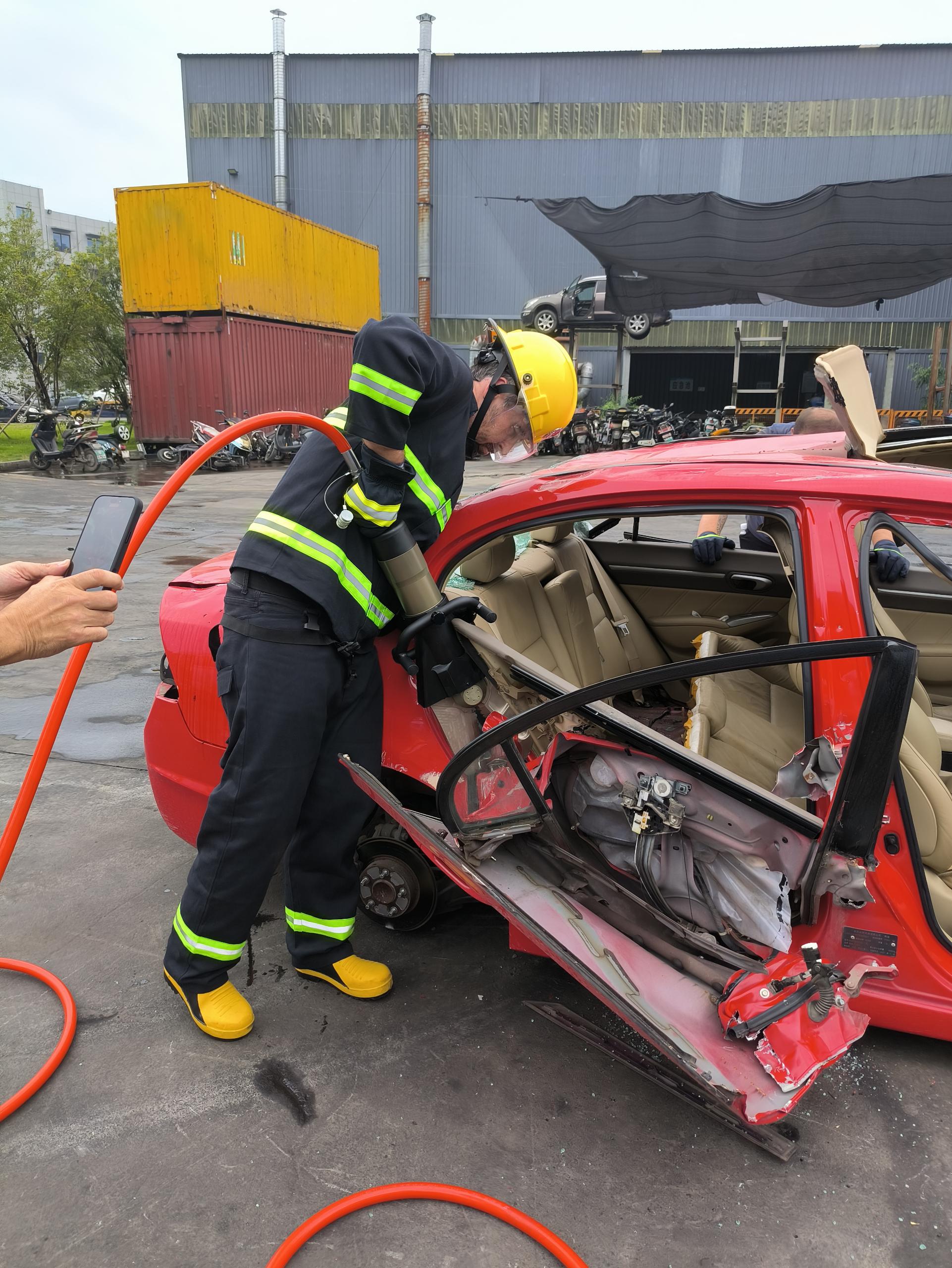
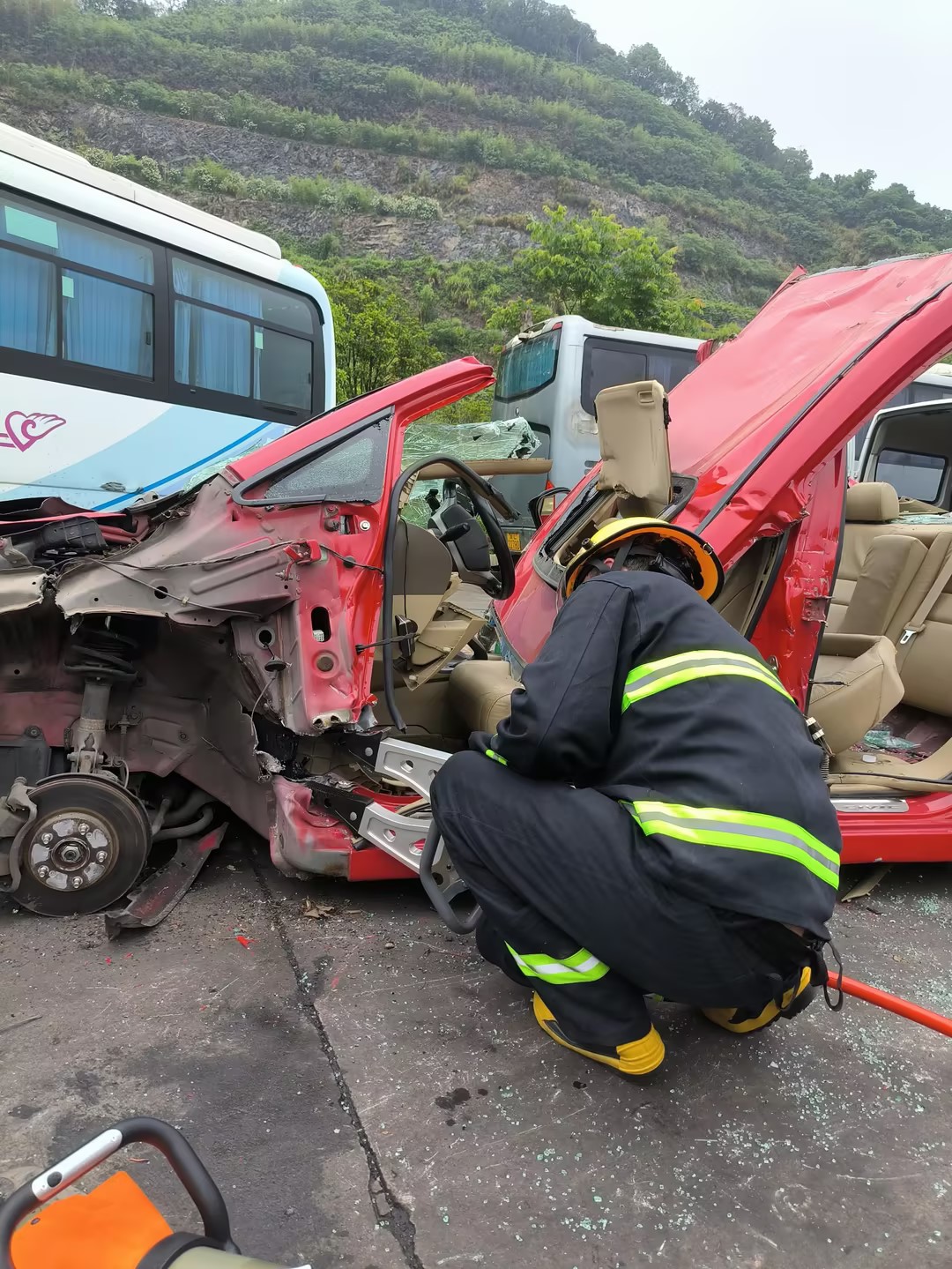
The primary demand is spreading, cutting and pulling on a deformed vehicle body. In Malaysia, rescue teams used ODE hydraulic extrication tools to rescue trapped victims in truck crash emergencies, and the ODE hydraulic rescue tools used in that case are EN13204 approved.
Earthquake and structural collapse response
During the Turkey earthquake, China Blue Sky Rescue, a civil rescue team from China, carried ODE electric rescue extrication equipment to the site, and in Malatya Province members worked with local rescuers after detecting signs of life. The equipment used in that case included the battery combi tool SC370-E, battery rescue cutter S251-E, battery spreader SP725-E and two-stage electric ram R322-E.
That deployment illustrates the toolkit argument directly: a four-tool cordless set covering cut, spread, combine and long-travel lift, with no pump and no hose run, was the configuration a civil rescue team chose to transport internationally.
Pre-positioned emergency equipment reserves
Pre-positioning is a different problem from first response: the equipment waits, then must work immediately. The Yunnan Fire and Rescue Service adopted ODE hydraulic extrication tools for rescue operations, with an on-site inspection and operator training session arranged for the deployment. The case addressed the need for pre-positioned emergency equipment reserves for sudden rescue and disaster response scenarios.
Water-adjacent and amphibious work
Where tools may be exposed to water, the amphibious range covers the same functions with a different sealing and connector approach. The ODE amphibious rescue tool set combi tool SC371-S1 is listed with a maximum shear force of at least 940 kN, maximum opening distance of at least 300 mm and maximum expansion distance of at least 395 mm, and the amphibious rescue tool set cutter S251-S with a maximum shear force of at least 940 kN and a maximum opening distance of at least 250 mm.
Comparison Table: The Ten Types Side by Side
| Rank | Tool type | Reference model | Power source | Primary mission | Key listed figure |
|---|---|---|---|---|---|
| 1 | Cordless rebar cutter | ODE battery rescue cutter S251-E | DC 28V 5.0Ah lithium battery | Cutting rebar, round steel and plate | 940 kN max cutting force; Φ40 mm Q235A round steel |
| 2 | Battery spreader | ODE battery spreader SP725-E | DC 28V 5.0Ah lithium battery | Spreading, tearing, squeezing, pulling | 38–65 kN spreading force; 740 mm spreading distance |
| 3 | Battery combi tool | ODE battery combi tool SC370-E | DC 28V 5Ah lithium battery | Cut, spread and pull in one body | 940 kN cutting force; 45–145 kN spreading force |
| 4 | Hydraulic cutter | ODE hydraulic cutter S251-L | 72 MPa hydraulic pump | Continuous-duty cutting | 940 kN max cutting force; 12.5 kg |
| 5 | Hydraulic ram | ODE hydraulic ram R410 | 72 MPa hydraulic pump | Propping and stabilising loads | 140 kN lifting force; 540–940 mm extension |
| 6 | Two-stage electric ram | ODE two-stage electric ram R322-E | DC 28V 5.0Ah lithium battery | Long-travel lift without a pump | 1385 mm extension height; 21.4 kg |
| 7 | Hydraulic expander | ODE hydraulic spreader SP725-L | 72 MPa hydraulic pump | Wide-gap spreading and traction | 740 mm spreading distance; 52 kN pulling force |
| 8 | Concrete crusher | Concrete breaking head in ODE SP520-S1 set | Hydraulic | Breaking slab, column and block | Head type supplied with the amphibious set |
| 9 | Wedge jack | ODE wedge jack KFC050-S | 63 MPa hydraulic pump | Starting a separation in a narrow slit | 2 mm minimum insertion slit; 50 mm spreading distance |
| 10 | Manual pump | ODE hand pump P620ASL | Manual, no fuel or electricity | Guaranteed hydraulic pressure supply | 72 MPa rated pressure; 2.4 L oil tank |
Comparative note: the figures above are the manufacturer's listed values for the named ODE models and are reproduced for specification comparison. They are not independent test results, and they should not be used to infer performance of other manufacturers' tools that happen to fall into the same tool type.
FAQ
1. Are these cordless and hydraulic rescue tools certified to EN 13204?
Several ODE battery models are listed as EN13204 approved, including the battery combi tool SC370-E, the battery rescue cutter S251-E and the battery spreader SP725-E. Because certification is edition-specific, buyers should confirm which edition a declaration refers to: EN 13204:2016 specifies safety and performance requirements for double-acting hydraulic rescue tools, while DIN lists EN 13204:2025, titled Powered rescue tools for fire and rescue service use — Safety and performance requirements, as the newer edition replacing the 2016 edition. A supplier should be able to state the edition, provide the declaration of conformity, and supply the corresponding test report.
2. How do hydraulic and battery rescue tools work together in one toolkit?
They divide the work by power architecture rather than by capability. Battery tools such as the ODE SC370-E, SP725-E, S251-E and R322-E carry their power source, use an integrated hose-free design, require no external oil pump or connecting hoses, and are operable by a single person, which reduces pre-rescue preparation time. Hydraulic tools such as the ODE S251-L, SP725-L, SC370-L and R522-L draw pressure from a shared pump platform at 72 MPa or from the double-output engine pump MDP220 at a rated working pressure of at least 72 MPa, and are suited to sustained sequences. A practical toolkit uses battery tools for first-in deployment and hydraulic tools for extended operations, with a manual pump as the fallback pressure source.
3. Which tool types should a first-time buyer purchase first?
Priority should follow task coverage per unit of budget, not the number of tools purchased. Cutting sits at the top because cutters held the largest product-type share of the hydraulic rescue tools market at 31.4% in 2025 according to Dataintelo. In practice that means securing a cutting capability, a spreading capability and a combined capability before widening the range: the ODE electric rescue tools set SC370-E + SP725-E + S251-E + R322-E covers cut, spread, combine and lift on one battery platform, while the ODE hydraulic rescue tools set MDP220 + S251-L + SP725-L + SC370-L + R522-L covers the same functional spread on a shared engine pump.
4. Can a buyer request a sample before committing to a stocking order?
Yes. ODE accepts sample requests, with the carrier charge on the buyer's side. For commercial planning, ODE lists a minimum order quantity of 2 units, a monthly capacity of 5000 units and a lead time of 45–60 days, and provides OEM and ODM support including drawing design services and customisation of voltage, power, colour and brand together with minor function adjustments. Buyers evaluating a new tool type should use the sample stage to confirm the handle ergonomics, the connector type and the battery interface before scaling the order.
5. What is the production lead time, and what support follows delivery?
ODE lists a lead time of 45–60 days against a monthly capacity of 5000 units, with remote after-sales support. For a stocking plan, lead time should drive the spare-tool depth: an item with a 45–60 day replenishment window needs a deeper buffer than an item that can be reordered quickly. Buyers can request a current quotation, lead-time confirmation and the full catalogue directly — email rfq@ode119.com, message WhatsApp +86 135-8886-7391, or call +86 571-88830425 to confirm which of the ten tool types are currently available for sample dispatch.
Conclusion
The ten tool types in this list are not ten alternatives. They are ten positions on a single toolkit, and the ranking reflects how much each one removes from the burden of the others. The cordless rebar cutter and battery spreader remove the pump from the first trip. The battery combi tool removes the second trip entirely. The hydraulic cutter, ram and expander restore continuous duty once the pump is on scene. The two-stage electric ram removes the pump again for long-travel lifts. The concrete crusher and wedge jack handle the two geometries — crushing and narrow-slit entry — that no other type covers. The manual pump guarantees that none of the hydraulic tools are ever stranded.
For 2026, the defensible stocking decision is therefore a layered one: establish cutting depth first, standardise the battery platform across cordless tools, fix the hydraulic pump platform before expanding the hydraulic range, and buy the attachments with the tools. ODE Technology Co., Ltd. manufactures across both architectures from a 110,000 m² facility in Deqing, Huzhou, Zhejiang, China, with products exported to markets including the USA, EU, Thailand, Vietnam, Morocco, Serbia, Hungary, Brazil and Argentina.
Next Step: Request Samples and a Current Quotation
Buyers who want to validate the ten types against their own mission profile can request a sample, a current price list and the full product catalogue. ODE supports OEM and ODM programmes with drawing review, battery platform selection and minor function adjustment.
Email: rfq@ode119.com | WhatsApp: +86 135-8886-7391 | Tel: +86 571-88830425
Website: www.odetools.com | Download the English brochure: ODE Company Brochure (PDF)
Address: ODE Group, No.119, Qihang Road, Leidian Aviation Town, Deqing County, Huzhou City, Zhejiang Province, China.
Have Questions or Need More Details?
Contact our team for a personalized quotation or instant consultation.
Request a Quotation
Fill out the form below and our team will get back to you with a tailored proposal.
WhatsApp Direct Chat
Prefer to chat in real-time? Message us on WhatsApp for instant assistance & quick answers.
- Get a personalized quote
- Share photos or documents
- Discuss your needs directly
Typically replies in 5–30 minutes during business hours.