Hydraulic & Electric Rescue Tools Partnership: Supply & Service FAQ
A distributor or rescue agency shortlisting a hydraulic and electric rescue tool supplier for the long term is not really choosing a product. It is choosing which tool families, battery packs, spare parts, documents and technical contacts will still be available in year three and year five. ODE Technology Co., Ltd. (ODETECH) is a China-based manufacturer of hydraulic and electric rescue tools — cutters, spreaders, combi tools, rams, rebar tools and the pumps that drive them — and this partnership FAQ answers the questions that distributors and rescue agencies actually raise before committing to a multi-year relationship: manufacturer or trading company, how the product families pair, how to protect battery-platform continuity, how to plan spares, and what to expect from after-sales support.
Why a partnership question is different from a product question
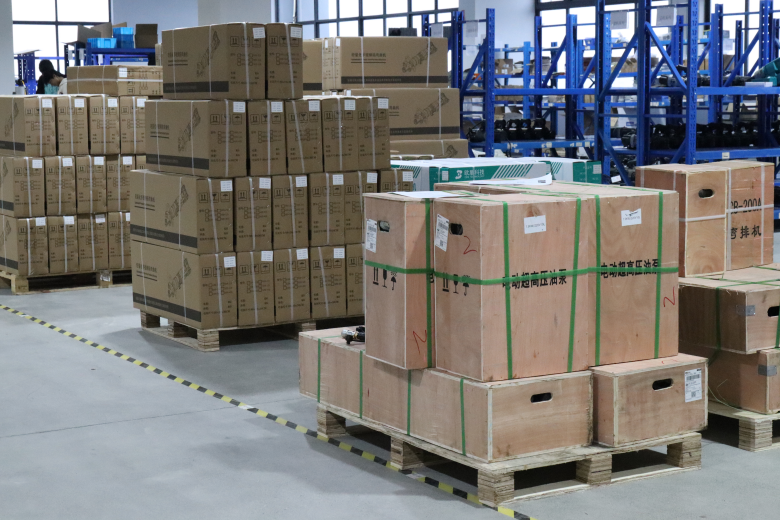
A rescue tool procurement that looks simple at order stage becomes complicated later. Blades wear, seals age, hoses and couplings get damaged, battery packs lose capacity at a different rate from the tools they power, and crews rotate so the people trained on a tool set are no longer the people using it. At the same time, the standards a tool was specified against can be revised during the life of the fleet.
That set of risks defines what a long-term supplier evaluation should actually measure: whether the product families are complete enough to equip a whole unit, whether model codes stay stable enough to re-order against, whether battery and charger identity is documented, whether spare parts can be named and priced, who answers when a tool fails in service, and how the supplier communicates a design or standard change. Price matters, but it is one line in that structure, not the structure itself.
Manufacturer or trading company — and why the distinction matters here
ODE's own answer is direct: the company states that it is a manufacturer with more than ten years of production experience, that it operates its own factory in Zhejiang, China, and that it also cooperates with other factories. That third point is worth reading carefully rather than skipping. A supplier that both manufactures and sources can serve a wider item list, but a buyer planning a five-year fleet needs to know which items come from which source, because that determines who controls the design record, the spare-part identity and the change notification.
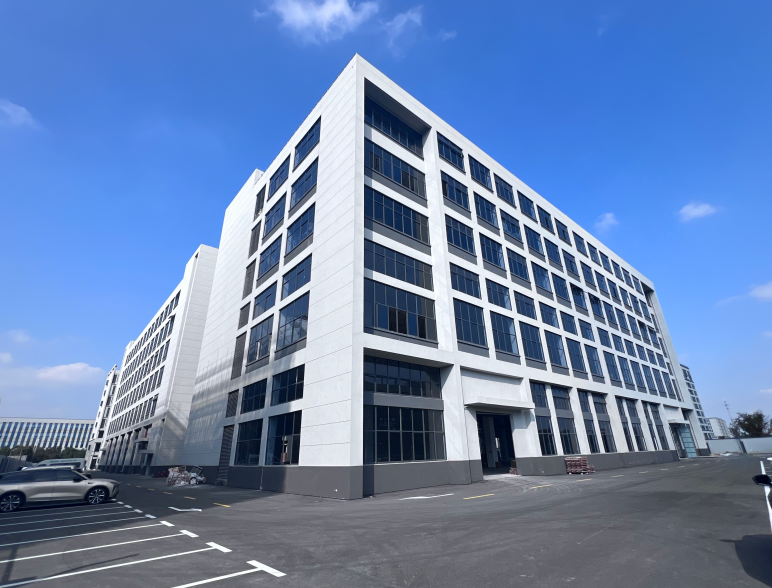
Company facts that are relevant to a long-term relationship include a 110,000 m² facility, approximately 200 employees, status as a National High-Tech Enterprise and a National Specialized, Refined, Differential and Innovative "Little Giant" Enterprise, a provincial-level research institute and nearly 200 patents. Listed export markets include the USA, the EU, Thailand, Vietnam, Morocco, Serbia, Hungary, Brazil and Argentina. ODE states that it holds CE certification and ISO 9001.
For a distributor, the practical step is an item-level origin statement in the quotation or agreement: for each model you intend to stock, record whether it is produced in ODE's own plant or sourced through a partner factory, and which document set applies. That single table prevents most of the ambiguity that shows up two years later when a part has to be re-ordered.

How the hydraulic and electric product families pair
The most common structural question from distributors is how the families fit together into one fleet, and whether a unit should standardise on battery tools, hydraulic tools, or both. ODE's range splits into an electric family identified by the -E suffix, a hydraulic family identified by the -L suffix, and the pumps, rams and rebar tools that support them.
| Family | Models | Role in a fleet |
|---|---|---|
| Battery combi tool | SC370-E | One tool covering cutting, spreading and lifting tasks where carrying three tools is impractical. |
| Battery cutter | S251-E | Dedicated cutting in the electric set. |
| Battery spreader | SP725-E | Dedicated spreading and opening in the electric set. |
| 2-stage electric ram | R322-E | Lifting and stabilising where a ram is required rather than a spreading tool. |
| Electric rescue tool set | SC370-E + SP725-E + S251-E + R322-E | Complete battery-powered set, listed by ODE as a package. |
| Hydraulic cutter | S251-L | Dedicated cutting in the hydraulic set. |
| Hydraulic cutter and spreader | SC370-L | Combined hydraulic tool for units that prefer one hydraulic workhorse. |
| Hydraulic spreader | SP725-L | Dedicated spreading in the hydraulic set. |
| 2-stage hydraulic ram | R522-L | Hydraulic lifting ram for the pump-driven set. |
| Double output engine pump | MDP220 | Power source listed in ODE's hydraulic rescue tool set with the four -L tools above. |
| Heavy duty double output power unit | P620SGB | Power unit option for buyers who need a heavier pump configuration. |
| Hand pump | P620ASL | Manual hydraulic power source, useful as a backup or for low-frequency use. |
| Hydraulic rescue tool set | MDP220 + S251-L + SP725-L + SC370-L + R522-L | Complete pump-driven set, listed by ODE as a package. |
The electric family
ODE describes its integrated electric-hydraulic rescue series as running at a rated working pressure of 72 MPa, built on a hose-free integrated design, operable by one person and combining shearing, spreading, lifting and tearing functions. For a fleet plan, the value of this family is time: there is no pump to position and no hose run to lay out before work starts. The trade-off a unit has to accept is dependence on battery state and charging discipline, which is why battery identity is the first question to close in the agreement, not the last.
The hydraulic family and its pumps
The -L tools do not operate alone. ODE lists a complete hydraulic rescue tool set combining the double output engine pump MDP220 with the cutter S251-L, spreader SP725-L, cutter-spreader SC370-L and 2-stage ram R522-L. The hand pump P620ASL and the heavy duty double output power unit P620SGB give buyers alternatives at different points in that set. Because pump choice drives how many tools can be driven and how quickly, it should be fixed at distribution-agreement stage rather than ordered ad hoc later — the pump is the component most likely to be shared across a station's tools and therefore the one whose specification shapes the rest of the fleet.
Sets versus individual tools
Sets matter for long-term planning because they are the natural unit for spare-parts and training budgets. A distributor stocking component-by-component will often find that a station has three tools and no ram, or a ram and no pump. ODE's listed sets — the electric set of SC370-E, SP725-E, S251-E and R322-E, and the hydraulic set of MDP220 with S251-L, SP725-L, SC370-L and R522-L — give a reference configuration to plan against, which can then be adapted for local requirements.
Where the model list ends and the RFQ begins
ODE's product range also includes hydraulic rebar cutters, hydraulic rebar benders and hydraulic punchers. These sit alongside the rescue tools rather than inside the -E or -L sets, so when they are part of the same order, confirm the exact model, power source and part numbers rather than assuming they share anything with the rescue-tool platforms.
Two further categories deserve explicit confirmation instead of assumption: battery-powered pump units, and water-adjacent or amphibious tool configurations. Neither is identified by a model code in the material available for this article. If a tender or a distribution plan depends on either, ask for the current configuration, part numbers and documentation in writing before it is written into a contract — a catalogue photo is not a specification.
Battery-platform continuity is the first thing to fix in writing
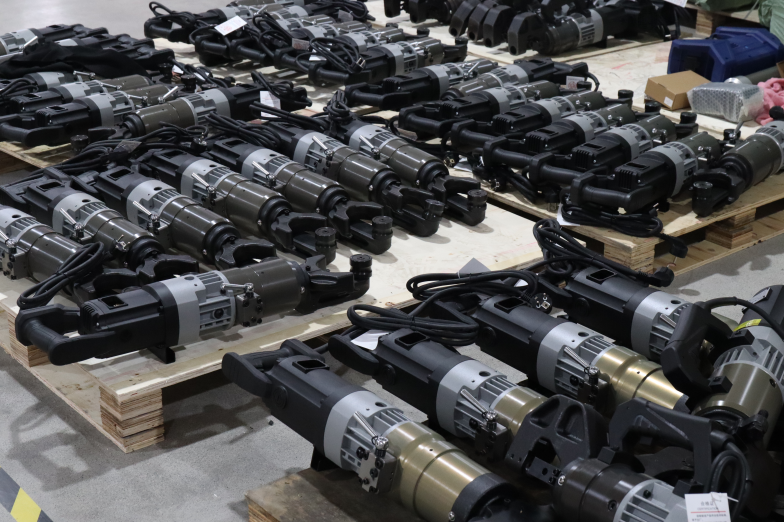
Four ODE tools carry the -E suffix: SC370-E, S251-E, SP725-E and R322-E. It is tempting to conclude from shared naming that they share battery packs and chargers. Naming is not evidence, and a fleet built on an assumption here can end up managing several incompatible packs and chargers with no warning.
The questions that close this risk are specific: what is the battery pack part number and rated voltage; what is the pack capacity; is the same pack used across all four -E models; is the charger common across them; what runtime and charging data exist under defined test conditions; and what is the supplier's policy when a pack or charger is revised or discontinued? Add a written commitment that any change to battery or charger identity is notified in advance with the replacement part number. For a distributor holding stock, that notice is worth more than a small price advantage, because it protects every unit already sold.
A practical sequencing rule follows: standardise the platform first, then the tools. Deciding on a battery and charger standard before placing a multi-model order avoids the most expensive form of fleet fragmentation, which is not mixed brands but mixed generations of one brand.
Building a spare-parts plan that survives the fleet's life
A spares plan built from model codes is far more reliable than one built from descriptions. Because ODE's models are individually coded, a distributor can construct a parts matrix by model rather than by tool type, and can hold the supplier to that matrix at each annual review.
Structure the matrix in three layers. The first layer is wear and consumable items per model: cutting edges and blades, seals, hoses and couplings, and the small parts that fail under normal service. The second layer is the recoverable sub-assemblies a workshop would replace rather than repair. The third layer is power: battery packs and chargers for the -E tools, and the service parts associated with the MDP220, P620SGB and P620ASL pumps.
Then ask the supplier for four things in writing. A recommended initial spares list per model, with part numbers. A statement of which parts are common across models and which are unique — commonality is what makes a distributor's stockholding economical. A re-order reference so a part can be requested without describing it. And a supersession policy: when a part number changes, what is the notification route and how long are the old and new parts both orderable?
Two stocking tiers usually make sense for an agency rather than a distributor: a station-level kit for fast-moving consumables, and a depot-level holding for slower, higher-value items and one spare power source. The split should follow how long a tool can be out of service locally, not an arbitrary percentage.
After-sales support: what to define before you need it
After-sales support is the part of a partnership most often left vague, and the part that decides whether a multi-year relationship holds. The useful move is to convert expectations into written terms while the commercial relationship is still being negotiated.
Four elements are worth fixing. First, warranty scope: the coverage period, what is covered, what is excluded, and whether consumables and batteries are treated differently from the tools. Second, the claim route: who is contacted, in what form, what evidence is needed, and what the supplier commits to doing at each step. Third, the technical contact: a named channel for engineering questions rather than a general sales inbox, so that a question about a pump specification does not get answered by someone pricing an order. Fourth, spare-part dispatch: how a part is ordered against the matrix and how it is shipped.
ODE's published contact channels support this directly: email rfq@ode119.com, WhatsApp +86 135-8886-7391 and telephone +86 571-88830425, with the company based at ODE Group, No.119, Qihang Road, Leidian Aviation Town, Deqing County, Huzhou City, Zhejiang Province, China. Distributors operating in a different time zone should agree response expectations explicitly rather than infer them.
Training, and why it belongs in the supply agreement
Training is usually treated as a launch activity. In a fleet it is a recurring one, because crew rotation outpaces equipment replacement. For a long-term partnership, three training topics should be addressed in the agreement rather than requested later: operation of the pump-driven hydraulic set, including correct pump selection between the MDP220 power unit, the P620SGB heavy duty unit and the P620ASL hand pump; handling, charging and inspection discipline for the battery tools; and routine inspection of blades, seals and hoses so that wear is caught before it becomes a failure.
The practical questions are who delivers the training, in what language the materials are provided, whether a train-the-trainer format is available so the distributor can repeat it locally, and how refresher sessions are scheduled. A distributor that can run its own training is far less exposed to crew turnover than one that depends on the manufacturer sending someone each time.
Compliance continuity across the agreement
Compliance is not a one-time gate. ODE states CE certification for its rescue tools and support for export, and holds ISO 9001. CE is tied to European Economic Area requirements, so a distributor selling into other markets should confirm destination-specific obligations separately rather than treating CE as universal clearance.
The hydraulic rescue tool standard itself is edition-sensitive. Published listings record EN 13204:2016 as covering safety and performance requirements for double-acting hydraulic rescue tools, and record a 2025 edition — DIN EN 13204:2025-06, titled for powered rescue tools — as replacing the 2016 edition and earlier related standards. That matters for a multi-year agreement in a very concrete way: a tool qualified in year one may need re-documentation before the agreement ends.
Three clauses protect the buyer. Request the declaration of conformity and test documentation for each specific model rather than at brand level. Record which standard edition the current documentation references, and ask to be notified when the applicable edition changes. And confirm how documentation is reissued — whether a revised declaration is supplied automatically or on request — because that is the item procurement audits ask for and distributors rarely hold in advance.
Commercial terms worth fixing before year one
For a distributor, the commercial questions that decide whether a partnership is workable are mostly about continuity rather than headline price: price validity period and currency, tiered pricing by item and volume, how spare parts are priced relative to complete tools, territory and whether any exclusivity is offered, minimum stock commitments on either side, packaging and marking for the destination market, and the notice period if a model is discontinued.
ODE states that it provides OEM service, which for a distributor can be the difference between reselling a catalogue item and owning a local brand. OEM scope should be defined precisely: which models, what branding and labelling, what packaging, what documentation and manuals, whether model naming changes, and which approval steps apply before production. An undefined OEM conversation tends to resurface as a delay at the first production run.
Frequently asked questions
What certifications and conformity documents should a long-term rescue tool supplier provide?
ODE states CE certification and ISO 9001, and confirms support for export. For a long-term agreement, request more than a certificate image: ask for the declaration of conformity and test documentation tied to each specific model you intend to stock — for example SC370-E, S251-E, SP725-E and R322-E in the electric family, or S251-L, SP725-L, SC370-L and R522-L in the hydraulic family. Confirm which edition of the relevant rescue tool standard the documentation references. CE addresses European Economic Area requirements; if you sell elsewhere, confirm destination-specific obligations separately.
Is ODE a manufacturer or a trading company?
ODE states that it is a manufacturer with more than ten years of production experience, operating its own factory in Zhejiang, China, and that it also cooperates with other factories. For a distributor this is a workable arrangement but one that should be documented: ask for an item-level origin statement showing, for each model you plan to stock, whether it is produced in ODE's own plant or sourced through a partner factory, and which documentation applies. That statement is what allows you to answer a customer's factory-audit question later without reconstructing the supply chain from memory.
Can ODE supply OEM-branded rescue tools, and what has to be agreed first?
Yes — ODE states that OEM service is available. Before the first order, define the scope in writing: which models are included, what branding and labelling is applied, what packaging and manuals are required and in which language, whether model naming changes, and which approval steps apply before production. Because ODE's range spans both battery tools such as SC370-E and pump-driven tools such as MDP220, an OEM programme should also state which power source and accessory set is included, so that the branded product you resell has a fixed and repeatable configuration.
How should we plan spare parts and battery continuity for a fleet bought over several years?
Build the plan on model codes rather than descriptions. Create a parts matrix per model covering consumables such as blades, seals and hoses; recoverable sub-assemblies; and power items — battery packs and chargers for the -E tools, and service parts for the MDP220, P620SGB and P620ASL pumps. Then request a recommended initial spares list with part numbers, a statement of which parts are common across models, and a supersession policy setting out how part-number changes are notified and how long old and new parts remain orderable. For battery continuity specifically, confirm the pack and charger part numbers, whether the same pack serves all four -E models, and require advance notice of any change — that single clause prevents a fleet from drifting into mixed battery generations.
Does pricing improve on repeat or volume orders?
ODE's stated position is that pricing depends on order quantity. For a long-term agreement, the more useful conversation is structural rather than a single discount request: ask for tiered pricing by item and volume, the price validity period and currency, how spare parts are priced relative to complete tools, and how pricing is reviewed at each annual renewal. Splitting the quotation this way makes it possible to compare two suppliers on the same basis, and it protects the spares budget — which is where a fleet's lifetime cost usually diverges from its purchase cost.
Can we evaluate a sample before committing to a distribution agreement?
Yes — ODE states that samples can be provided, with the carrier charge on the buyer's side. A sample is most useful when it is tied to a defined evaluation: choose the model that represents the largest share of your intended fleet, record what you are testing (operation, handling, charging discipline for battery tools, pump connection for hydraulic tools), and ask for the matching documentation at the same time so the technical and commercial evaluations move together rather than months apart.
How should lead time and delivery be handled in a multi-year supply agreement?
Schedule is configuration- and quantity-dependent, so it belongs in the quotation rather than in an assumption. Fix three things: a complete item list with model codes and quantities, the delivery windows you actually need across the year, and re-order trigger points for consumables and battery packs so that replenishment is planned rather than urgent. Treat the confirmed schedule as part of the agreement and review it at each renewal alongside pricing and spares. If you are building a first fleet list for evaluation, send the models and quantities you are considering to ODE Technology Co., Ltd. at rfq@ode119.com or via WhatsApp on +86 135-8886-7391, and ask for a quotation and a matching recommended spares list in the same response.
Conclusion
A long-term partnership with a hydraulic and electric rescue tool supplier is decided by continuity, not by a single quotation. The workable sequence is to confirm who manufactures what, fix the product families you will standardise on — battery tools such as SC370-E, S251-E, SP725-E and R322-E, or pump-driven tools such as S251-L, SP725-L, SC370-L and R522-L running from MDP220, P620SGB or P620ASL — and then close the four continuity questions before the first order: battery and charger identity, a parts matrix with part numbers, written warranty and service terms, and documentation that will be reissued when the applicable standard edition changes.
Distributors and rescue agencies that put those items in writing at the start spend far less time resolving them mid-contract. ODE Technology Co., Ltd. publishes its contact details and product documentation openly, which makes that evaluation straightforward to begin.
For the full product range, configurations and company information, download the ODE Technology English company and product brochure (PDF). Technical enquiries: rfq@ode119.com | WhatsApp +86 135-8886-7391 | Tel +86 571-88830425.
Have Questions or Need More Details?
Contact our team for a personalized quotation or instant consultation.
Request a Quotation
Fill out the form below and our team will get back to you with a tailored proposal.
WhatsApp Direct Chat
Prefer to chat in real-time? Message us on WhatsApp for instant assistance & quick answers.
- Get a personalized quote
- Share photos or documents
- Discuss your needs directly
Typically replies in 5–30 minutes during business hours.