From Door Opening to Extrication: Solving Common Rescue Bottlenecks with the Right Tool
Most extrication delays are not caused by a shortage of tools on scene. They come from a mismatch between the tool in the crew's hands and the bottleneck in front of the crew. Four bottlenecks repeat across vehicle, structural and water-adjacent rescue: a door or structure that will not open, spreading force that ends before the metal moves, a lift that shifts under load, and a tool that stops working when the ground is wet.
This guide works from those four bottlenecks outward. Each bottleneck is matched to a tool type, and each tool type is matched to a verified product from ODE Hydraulic & Electric Rescue Tools, the rescue range manufactured by ODE Technology Co., Ltd. (ODETECH) — a China-based manufacturer founded in 2010, operating a 110,000 m² facility with approximately 200 employees, exporting to markets including the USA, EU, Thailand, Vietnam, Morocco, Serbia, Hungary, Brazil and Argentina. Specifications are quoted as published; where a number is not published, none is given here.
Problem Definition: Four Bottlenecks That Decide the Timeline
Extrication time is lost at a small number of specific points, and each point fails for a mechanical reason rather than an operator reason. Naming the bottleneck first is what allows a team to select a tool deliberately instead of improvising on scene.
Bottleneck 1 — Entry delay: the door or structure will not open
A closed door, a deformed frame or a collapsed structural element gives the crew nowhere to insert a spreading tip. Without an insertion point, the powerful tools stay on the ground and the operation stalls at the first step. The mechanical answer is a two-stage entry: create a narrow insertion slit with a low-profile wedge, then convert that slit into a working opening with a cutting-and-spreading tool.
Bottleneck 2 — Spread force that ends before the metal moves
Spreaders are specified as a force range rather than a single figure, because the force delivered changes across the spreading stroke. When a crew compares only a peak number, or compares a peak figure against a range, the selected tool can stall part-way through a door or a pillar. The relevant question is not only maximum spread force but also maximum spreading distance — how far the arms travel after the force is applied.
Bottleneck 3 — Lifting that does not stay where it is placed
Lifting fails when the load creeps, when the ram tip slips on an inclined or smooth surface, or when the second stage of a ram engages abruptly under load. A single-stage ram may run out of stroke before the load is clear. A two-stage ram solves the stroke problem, but only if it is stable at the contact points and controllable during the transition between stages.
Bottleneck 4 — Wet-environment failure
Water-adjacent work — riverbanks, flooded basements, coastal accident sites, embankments — creates two separate risks. The first is equipment failure from the environment. The second is control loss: the operator's hands are occupied with the tool, and the power source is hard to reach. Solutions that address only the first risk still leave the second in place.
Industry Background: Why These Bottlenecks Persist
Rescue tooling has become a large, consolidated category, yet the bottleneck problem survives inside it. According to a Dataintelo market study, the global hydraulic rescue tools market was valued at USD 1.8 billion in 2025 and is projected to reach USD 3.1 billion by 2034, a CAGR of 6.2%. Cutters held the largest product-type share in 2025 at 31.4%. The top five players — Holmatro, Hurst Jaws of Life, LUKAS, Amkus and Weber — were estimated to account for 52% to 58% of global market revenue in 2025.
Growth has not removed the selection problem, because compliance and performance requirements are edition-sensitive. EN 13204:2016 specifies safety and performance requirements for double-acting hydraulic rescue tools manufactured after publication, and DIN lists EN 13204:2025-06 as the newer edition — titled Powered rescue tools for fire and rescue service use – Safety and performance requirements — replacing the 2016 edition and earlier related standards. In North America, NFPA 1936 (2020 edition) requires rescue tool labels to be permanent and appropriately sized, and the 2020 edition removed requirements for rescue struts.
That combination explains why bottleneck-driven selection matters. A tool set built around power source alone — battery versus hydraulic — does not answer the question of which bottleneck each tool removes. The practical unit of planning is the bottleneck, and the tool is the deliverable.
Tool-to-Bottleneck Matching: The Detailed Solution
ODE Hydraulic & Electric Rescue Tools covers both power architectures: a hydraulic family driven by hand pumps, engine pumps and power units, and a battery-electric family driven by integrated 28 V lithium battery packs. The match below is organised by bottleneck, not by product family.
Entry delays: Wedge jack KFC050-S first, Battery Combi Tool SC357-E second
The Wedge jack KFC050-S is built for the first few millimetres. It has a minimum insertion slit of 2 mm, a rated pressure of 63 MPa, a maximum spreading distance of 50 mm and a spreading force of 210 kN at 11.1 kg. A 2 mm slit is exactly what a deformed door edge or a jammed frame gives a crew, which is why the wedge belongs to the entry stage rather than the removal stage.
Once the slit exists, the opening is a combi-tool job. The Battery Combi Tool SC357-E integrates shearing and spreading, and adds pulling: rated working pressure 720 bar, maximum cutting force 800 kN, cutting capacity of Φ32 mm Q235 round steel and 8 mm Q235 steel plate, spreading force 45–90 kN, maximum spreading distance 380 mm, maximum cutting opening distance 280 mm, pulling force 83 kN over a 290 mm pulling distance, 18.5 kg excluding battery. It runs on a DC 28 V 5 Ah battery with an intelligent plug-and-play battery design, LED level display, built-in LED night lighting for dark areas, seven LED indicators across seven battery levels and a low-power alarm below 20% remaining capacity. A star-shaped directional valve supports precise control, and the tool ships in a military-grade rolling engineering case with two batteries, a charger, a carrying strap and a manual.
 Battery Combi Tool SC357-E: 720 bar rated working pressure, 45–90 kN spreading force and 280 mm maximum cutting opening distance for the opening stage.
Spread force: Hydraulic spreader sp210, Battery spreader SP725-E and Battery Combi Tool SC370-E
For dedicated spreading, the Hydraulic spreader sp210 delivers a 35–80 kN spreading force range, a maximum spreading distance of at least 610 mm, 48 kN maximum pulling force over a 537 mm pulling distance, at 18.9 kg on 72 MPa working pressure. Its spreading tip uses a flat design that can wedge into extremely narrow gaps, and the tip surface is treated for anti-slip performance. Male-female snap fasteners, an anti-slip switch control and an internal bi-directional hydraulic lock with self-locking function support controlled operation.
Where the spreading stage must be cordless, the Battery spreader SP725-E delivers a 38–65 kN spreading force, a maximum spreading distance of 740 mm, 95 kN maximum squeezing force, 35 kN maximum pulling force over 640 mm, at 22.6 kg on 720 bar — listed as EN13204 approved. When one tool has to cover both spreading and heavy cutting, the Battery Combi Tool SC370-E in the electric rescue tool set SC370-E + SP725-E + S251-E + R322-E reaches 45–145 kN spreading force, 390 mm maximum spreading distance, 940 kN maximum cutting force, Φ38 mm Q235 round steel and 20 mm Q235 steel plate cutting capacity, and 153 kN maximum squeezing force, at 18.5 kg.
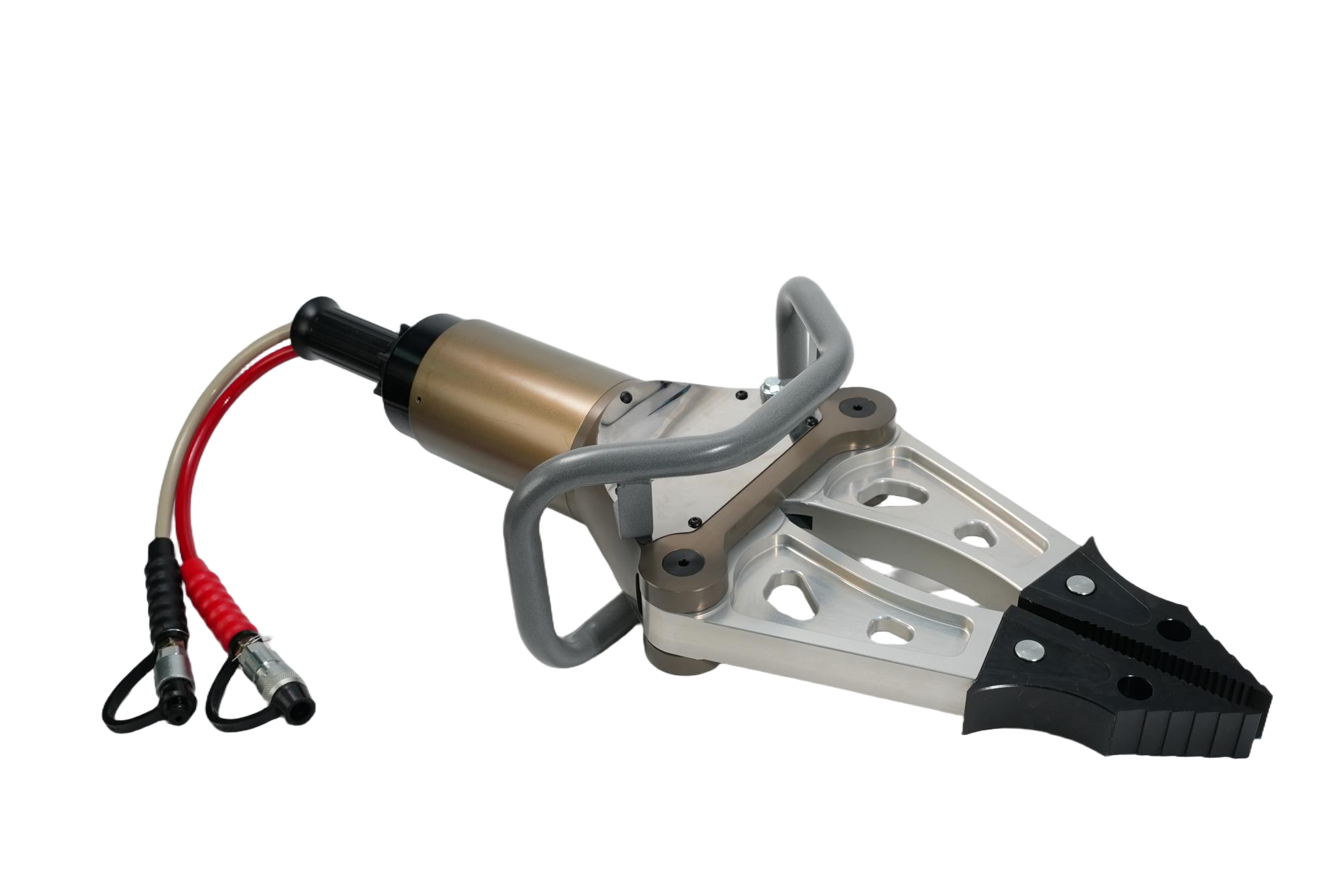 Hydraulic spreader sp210: 35–80 kN spreading force, spreading distance of at least 610 mm, flat tip design for extremely narrow gaps.
Selection rule. Compare spreaders on three figures at once: spreading force range, maximum spreading distance and weight. A higher force with a shorter arm travel can still stall on a door that needs to be pushed past its hinge geometry, and a heavier tool costs time when it has to be carried and repositioned.
Lifting stability: 2 stage Electric Ram R530-E, with hydraulic alternatives
The 2 stage Electric Ram R530-E is designed for propping load-bearing objects and building components on site. It delivers a first-stage extension stroke of 400 mm at 140 kN and a second-stage extension stroke of 345 mm at 70 kN, with a retracted length of no more than 540 mm, an extended length of at least 1285 mm, a rated operating pressure of 72 MPa and a weight of no more than 19.6 kg excluding battery — listed as EN13204 approved. Stability comes from a quick-change anti-slip pushing head with 360° free rotation, and control comes from a star-shaped directional valve. It uses the same DC 28 V 5.0 Ah battery format with plug-and-play design, LED level display, built-in LED night lighting, seven LED indicators and a low-power alarm below 20%, and ships with two batteries, a charger, a belt and a military-style rolling hard case.
Two hydraulic rams answer different lifting constraints. The 2-stage hydraulic Ram R522-L gives 72 MPa working pressure, a closed length of 560 mm, first-stage lifting height 935 mm at 275 kN and second-stage lifting height 1285 mm at 140 kN, at 17.7 kg — with a flat-seal flat-axis single interface that allows hot-swapping under pressure and easy cleaning, a handle light for dark environments, a laser alignment device at the ram tip for precise positioning, and quickly replaceable anti-slip tips that rotate 360°. For shorter, lighter lifts, the Hydraulic RAM R410 provides 72 MPa rated pressure, 400 mm total lifting stroke, 140 kN lifting force, 540–940 mm extension range, at 11.5 kg, with an anti-slip claw structure on both the piston rod head and the ram base for stable support on inclined or smooth surfaces, plus a built-in bi-directional hydraulic lock with self-locking function.
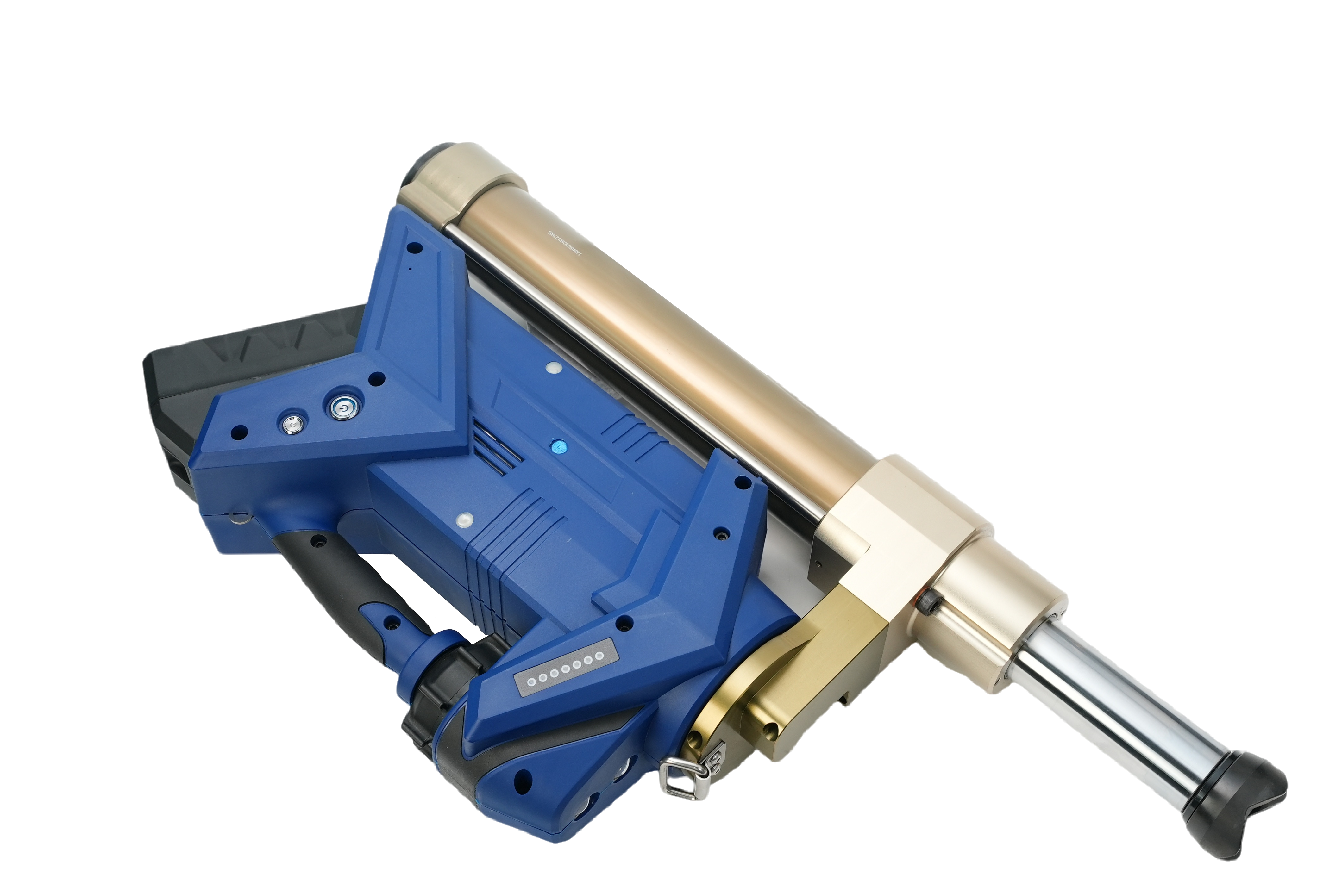 2 stage Electric Ram R530-E: 400 mm first stage at 140 kN, 345 mm second stage at 70 kN, retracted length no more than 540 mm.
Confined space and detail work: compact combi and cutting options
Confined-space work is a weight and reach problem before it is a force problem. The Hydraulic combi tool SC257 is the lightest combi option in this range at 15.1 kg, with 720 bar rated working pressure, 600 kN maximum cutting force, Φ30 mm Q235 round steel and 8 mm Q235 steel plate cutting capacity, 30–64 kN spreading force, 380 mm maximum spreading distance, 280 mm maximum cutting opening distance and 52 kN pulling force over 290 mm. For dedicated cutting in the same space, the battery rescue cutter S251-E in the electric set delivers 940 kN maximum cutting force with a 250 mm maximum opening distance, cutting Φ40 mm Q235A round steel and 20 mm Q235A steel plate at 17 kg.
Weight also has to be paired with visibility and reach inside a vehicle shell or a void. Both the SC357-E and the R530-E carry built-in LED night lighting and a seven-level battery indicator with an alarm below 20% remaining capacity, which allows a crew to judge remaining runtime without leaving the workspace.
Wet-environment missions: Amphibious rescue tool set pump P610AES
The Amphibious rescue tool set pump P610AES addresses both water-related risks at once. It is a two-stage pump that automatically adjusts pressure according to the external load, with rated working pressure of at least 72 MPa, low-pressure output flow of at least 1.75 L/min, rated output flow of at least 0.44 L/min, oil tank capacity of at least 2.5 L, weight of no more than 18.5 kg including oil (2 kg carrying bag) and overall dimensions of D240 x 720 mm. Its battery capacity is at least 8.4 Ah, and its underwater working depth is at least 100 m. It is equipped with a pressure depth detection function, buoyancy device accessories and a reflective tube bag, plus a dedicated 5-metre tube with inner tube.
Control is the second half of the problem, and the P610AES ships with a wired remote control system, a handheld wireless remote controller and a foot-operated wireless remote controller. Male-female snap fasteners simplify connection, an anti-slip switch control raises operating precision, and a built-in bi-directional hydraulic lock provides self-locking. The pump then drives hydraulic tools such as the Hydraulic spreader sp210, the Hydraulic combi tool SC257 and the Hydraulic RAM R410, so the tool family stays consistent between dry and water-adjacent tasks.
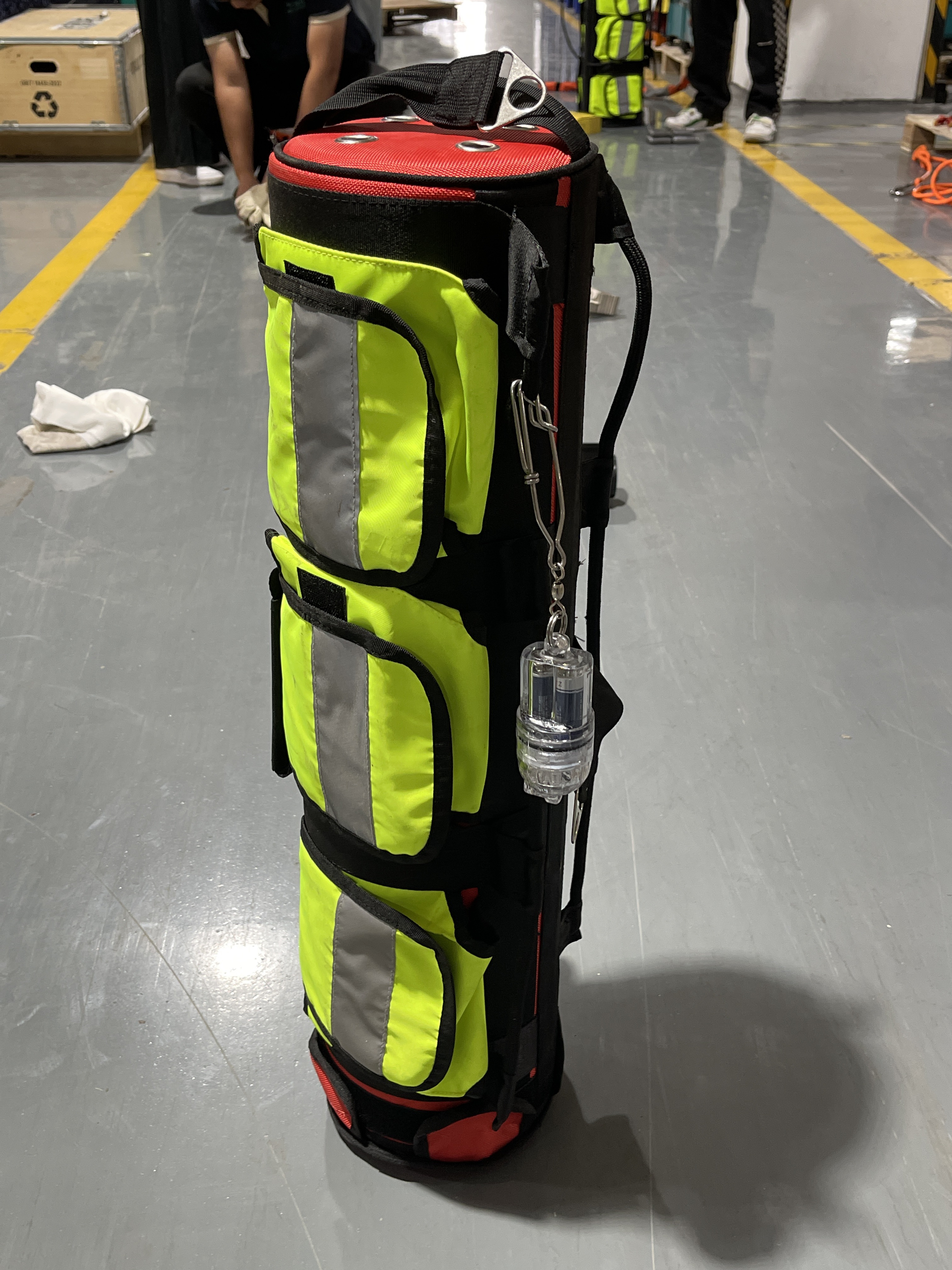 Amphibious rescue tool set pump P610AES: at least 72 MPa rated pressure, underwater working depth of at least 100 m, wireless remote control support.
Step-by-Step Breakdown: A Bottleneck-Driven Deployment Sequence
The sequence below follows the order in which the four bottlenecks usually appear on scene. It is a selection and deployment logic, not a substitute for the team's own operating procedures.
- Size up and create an insertion point. Identify the narrowest available slit at the door edge or frame. The Wedge jack KFC050-S needs 2 mm minimum insertion slit and provides 50 mm of maximum spreading distance at 210 kN spreading force.
- Convert the slit into an opening. Move to the Battery Combi Tool SC357-E: up to 280 mm maximum cutting opening distance and 380 mm maximum spreading distance, with 83 kN pulling force available once a panel has to be pulled rather than pushed.
- Cut only what must be cut. For round steel and plate, the electric set's S251-E cutter reaches 940 kN cutting force with Φ40 mm Q235A round steel capacity and a 250 mm opening; the SC370-E combi tool covers 20 mm Q235 steel plate while retaining 145 kN spreading force.
- Stabilise before lifting. Place the 2 stage Electric Ram R530-E with its anti-slip pushing head rotated to match the contact surface, then extend in two controlled stages — 400 mm at 140 kN, then 345 mm at 70 kN — instead of forcing a single long stroke.
- Switch the power architecture when the ground is wet. Move to the Amphibious rescue tool set pump P610AES with its 5-metre dedicated tube and wired or wireless remote control, driving hydraulic tools rated at 72 MPa.
- Recover and restore readiness. Return each battery tool to its case with two charged packs, confirm the seven-level indicator registers above the 20% alarm threshold, and log which bottleneck consumed the most time so the next deployment starts from a better baseline.
Use Cases: Where Each Match Applies
Vehicle extrication is the clearest application of the full chain. ODE electric hydraulic rescue tools have been used for vehicle extrication in traffic accidents, including door opening, window breaking and propping. Malaysian rescue teams used ODE hydraulic extrication tools to rescue trapped victims in truck crash emergencies.
Structural collapse and earthquake response shift the emphasis toward lifting and stabilisation. At the Turkey earthquake, members of China Blue Sky Rescue carried ODE electric rescue extrication equipment to the site in Malatya Province and worked with local rescuers after signs of life were detected — a scenario where cordless tools avoid hose routing through rubble.
Fire and rescue services use the range as standing capability rather than one-off procurement. ODE hydraulic extrication tools have been adopted by fire and rescue services in Yunnan (Zhaotong) and Aksu, Xinjiang, and the range is used by the China Fire and Rescue Service for emergency equipment reserve for sudden rescue and disaster response.
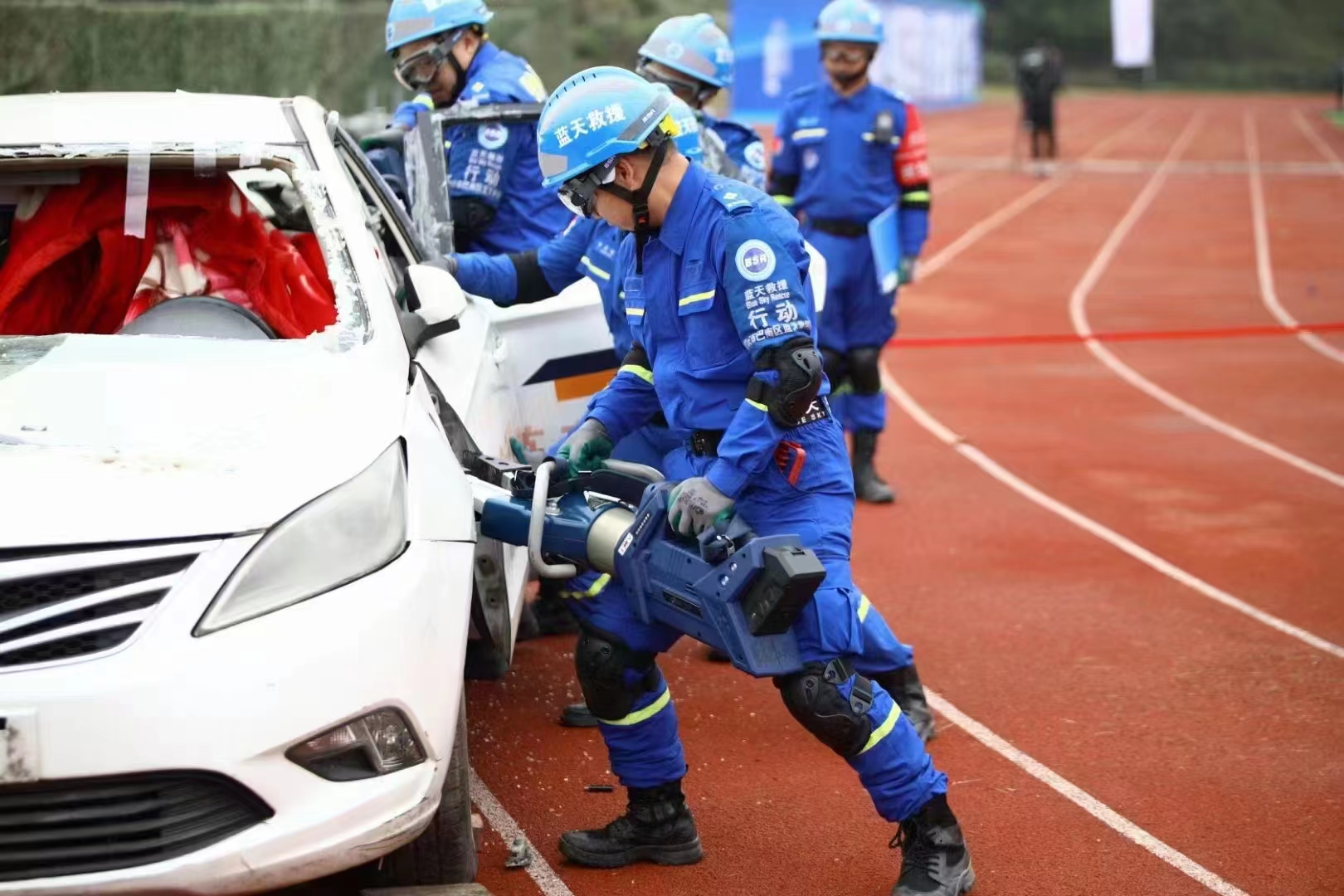 Chongqing Blue Sky Rescue using ODE electric hydraulic rescue tools — cordless deployment without pump or hose routing.
Water-adjacent missions are the case where a dry-rated kit is the wrong kit. Riverbank vehicle recovery, flooded underpasses and coastal or embankment incidents are handled with the P610AES configuration, because the pump carries a stated underwater working depth of at least 100 m and a dedicated 5-metre tube rather than relying on improvised hose lengths.
Where a single power source must run two tools at once, the Double output Engine Pump MDP220 supports simultaneous connection and operation of two sets of tools, with rated working pressure of at least 72 MPa, 2.2 kW four-stroke engine power and a hydraulic oil tank volume of at least 4.5 L at no more than 23 kg including oil. The range also includes the heavy duty double output power unit P620SGB and the Hand Pump P620ASL for teams that plan hydraulic capability without an engine-driven source.
Comparison Table: Bottleneck, Tool and Verified Specification
| Bottleneck | Recommended ODE tool (model) | Verified specification | What it removes on scene |
|---|---|---|---|
| Slow forced entry | Wedge jack KFC050-S | 63 MPa rated pressure; 2 mm minimum insertion slit; 50 mm max spreading distance; 210 kN spreading force; 11.1 kg | No insertion point at the door edge or frame |
| Slow forced entry | Battery Combi Tool SC357-E | 720 bar; 800 kN cutting force; Φ32 mm Q235 round steel and 8 mm Q235 plate; 45–90 kN spreading; 380 mm spread; 280 mm cutting opening; 83 kN pulling; 18.5 kg | Opening and panel removal with one cordless tool |
| Insufficient spread force | Hydraulic spreader sp210 | 72 MPa; 35–80 kN spreading force; ≥610 mm spreading distance; 48 kN pulling over 537 mm; 18.9 kg | Stalling on narrow gaps and short arm travel |
| Insufficient spread force | Battery spreader SP725-E | 720 bar; 38–65 kN spreading; 740 mm spreading distance; 95 kN squeezing; 35 kN pulling over 640 mm; 22.6 kg; EN13204 approved | Long-travel spreading without a pump or hose |
| Insufficient spread force | Battery Combi Tool SC370-E | 720 bar; 45–145 kN spreading; 390 mm spread; 940 kN cutting; Φ38 mm Q235 round steel and 20 mm Q235 plate; 153 kN squeezing; 18.5 kg; EN13204 approved | Heavy spreading and heavy cutting in one tool |
| Unstable lifting | 2 stage Electric Ram R530-E | 72 MPa; 400 mm first stage at 140 kN; 345 mm second stage at 70 kN; retracted ≤540 mm; extended ≥1285 mm; 19.6 kg; EN13204 approved | Stroke shortfall and tip slip under load |
| Unstable lifting | 2-stage hydraulic Ram R522-L | 72 MPa; 935 mm first stage at 275 kN; 1285 mm second stage at 140 kN; closed 560 mm; 17.7 kg; laser alignment | Positioning error and hose-limited setup |
| Confined space | Hydraulic combi tool SC257 | 720 bar; 600 kN cutting; Φ30 mm Q235 round steel and 8 mm Q235 plate; 30–64 kN spreading; 380 mm spread; 15.1 kg | Weight and reach limits inside a shell or void |
| Wet environment | Amphibious rescue tool set pump P610AES | ≥72 MPa; low-pressure flow ≥1.75 L/min; rated flow ≥0.44 L/min; tank ≥2.5 L; battery ≥8.4 Ah; underwater working depth ≥100 m; ≤18.5 kg | Water ingress risk and hard-to-reach controls |
FAQ
Are these rescue tools certified to EN 13204, and which edition applies?
The 2 stage Electric Ram R530-E and the electric rescue tool set SC370-E + SP725-E + S251-E + R322-E are listed by ODE as EN13204 approved. Edition matters: EN 13204:2016 specifies safety and performance requirements for double-acting hydraulic rescue tools, while DIN lists EN 13204:2025-06 as the newer edition titled Powered rescue tools for fire and rescue service use – Safety and performance requirements, replacing the 2016 edition and earlier related standards. Buyers should therefore confirm which edition a tender references and request the declaration of conformity and test reports for the exact model. ODE also states CE and ISO9001 certification.
Can one battery format run the combi tool, cutter, spreader and ram in a single deployment?
ODE's electric tools are specified with DC 28 V 5.0 Ah batteries, and each tool is supplied with two batteries, one charger and one belt. The Battery Combi Tool SC357-E and the 2 stage Electric Ram R530-E carry seven LED indicators across seven battery levels plus a low-power alarm below 20% remaining capacity, so remaining runtime is visible inside the workspace. Because runtime depends on load and duty cycle, confirm cross-tool battery interchangeability and per-tool runtime figures with the supplier before a fleet order.
How is pricing structured when the tool set is built around bottlenecks?
ODE does not publish list prices in its product data. Price depends on the configuration and the order quantity — ODE states that discounts depend on order quantity — and the minimum order quantity is 2 units. The practical cost driver is coverage, not tool count: an entry-level set built on the Wedge jack KFC050-S and the Battery Combi Tool SC357-E covers bottleneck one, while adding the 2 stage Electric Ram R530-E covers lifting and the Amphibious rescue tool set pump P610AES covers water-adjacent work.
Can we evaluate a sample before committing to a full order?
Yes. ODE states that samples are available, with the carrier charge on the buyer's side, and the minimum order quantity is 2 units. Electric tools ship in a military-grade or military-style rolling case with two batteries, a charger, a carrying strap and a manual, so a sample can be put through a realistic deployment cycle rather than inspected only at the bench. OEM/ODM support includes drawing design and customization of voltage, power, color and brand, together with minor function adjustments.
What lead time and capacity should a department or distributor plan for?
ODE states a lead time of 45–60 days and a monthly capacity of 5000 units, with OEM/ODM production and remote after-sales support. For planning purposes, that window should be set against the number of bottlenecks a team needs to cover and the number of battery packs each tool carries. To start a configuration review, request a quote or sample through rfq@ode119.com or WhatsApp +86 135-8886-7391, with the bottleneck list and the models under consideration.
About the Manufacturer
ODE Technology Co., Ltd. (ODETECH) was founded in 2010 and is a National High-Tech Enterprise and a National Specialized, Refined, Differential and Innovative "Little Giant" Enterprise. The company operates a 110,000 m² facility with approximately 200 employees and a provincial-level research institute, holds nearly 200 patents, and focuses on hydraulic rescue tools, heavy-duty supports and rescue equipment for engineering construction, industrial manufacturing and emergency rescue. Products are exported to markets including the USA, EU, Thailand, Vietnam, Morocco, Serbia, Hungary, Brazil and Argentina. Contact: www.odetools.com, rfq@ode119.com, +86 571-88830425, ODE Group, No.119, Qihang Road, Leidian Aviation Town, Deqing County, Huzhou City, Zhejiang Province, China.
Conclusion
Bottleneck-driven selection turns a tool list into a sequence. The Wedge jack KFC050-S creates the 2 mm entry slit, the Battery Combi Tool SC357-E turns it into a 280 mm opening, the Battery Combi Tool SC370-E or the Hydraulic spreader sp210 supplies the spreading force and travel to move the structure, the 2 stage Electric Ram R530-E lifts in two controlled stages with an anti-slip head, and the Amphibious rescue tool set pump P610AES keeps hydraulic power available where the ground is wet. Each choice is backed by a published figure, and each figure answers a specific failure point.
The limits are equally clear. Battery tools depend on charged packs and the 20% alarm threshold, hydraulic tools depend on pump capacity and hose management, and confined-space work is bounded by tool weight — the SC257 at 15.1 kg is the lightest combi option here, and the electric combi tools sit at 18.5 kg. Matching those limits to the scene is what keeps the timeline short.
Next Step: Build the Set Around Your Bottlenecks
Send your bottleneck list — entry, spread, lift or water-adjacent — and ODE will map it to specific models, battery configurations and hydraulic power options. Samples and quotes are available; the minimum order quantity is 2 units and lead time is 45–60 days.
Download the ODE Hydraulic & Electric Rescue Tools catalogue (PDF) · rfq@ode119.com · www.odetools.com
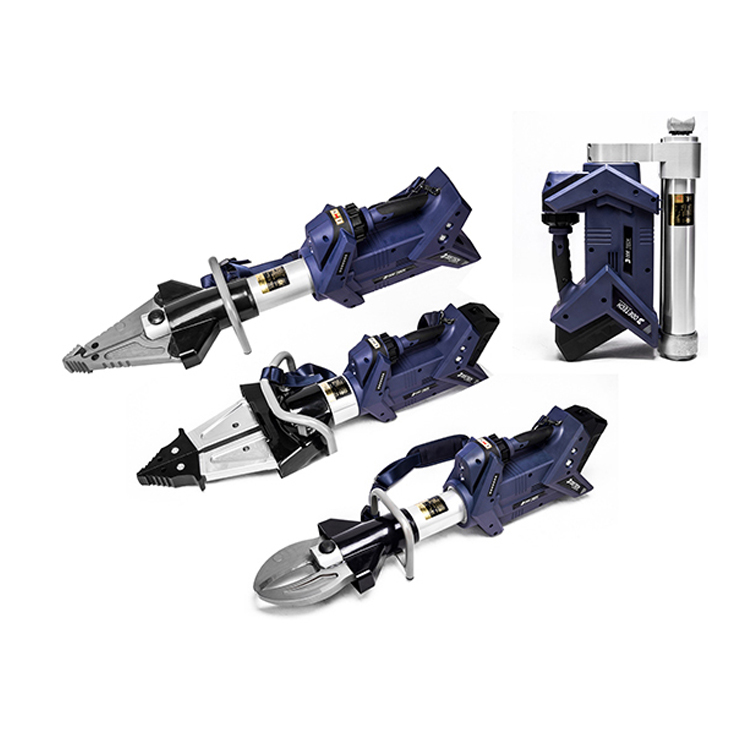 ODE electric hydraulic rescue tools ship with batteries, charger and a rolling case — ready for sample evaluation and configuration review.
Have Questions or Need More Details?
Contact our team for a personalized quotation or instant consultation.
Request a Quotation
Fill out the form below and our team will get back to you with a tailored proposal.
WhatsApp Direct Chat
Prefer to chat in real-time? Message us on WhatsApp for instant assistance & quick answers.
- Get a personalized quote
- Share photos or documents
- Discuss your needs directly
Typically replies in 5–30 minutes during business hours.