Single vs Double Output Engine Pumps & 2-Stage Rams Guide
Single vs Double Output Engine Pumps & 2-Stage Rams Guide
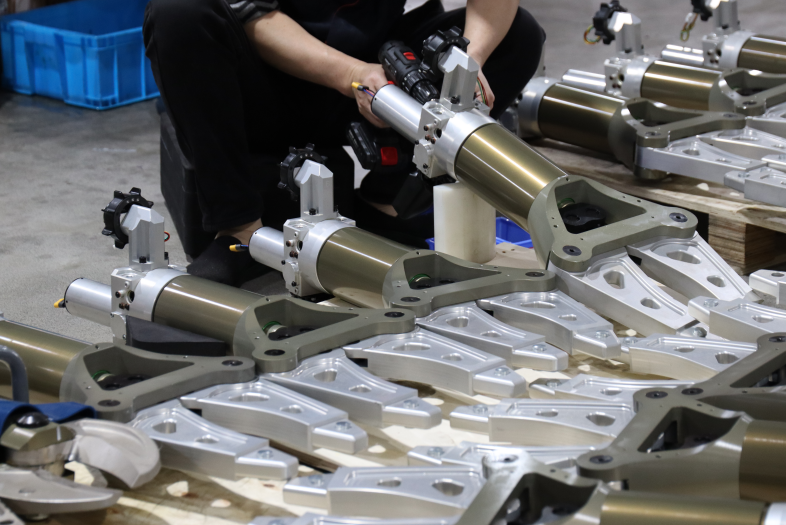
ODE assembly workshop in Zhejiang, China, where hydraulic rescue tools and power units are assembled and checked.
Answer first: The correct hydraulic power unit is not the one with the largest engine or the highest pressure label. It is the pump and ram combination that matches the tool circuit, flow at pressure, hose layout, and stroke/force envelope of the cutter, spreader, combi tool, or ram on scene. A single output engine pump is generally used when one tool runs at a time. A double output engine pump or heavy duty double output power unit is relevant when two tools must be connected or when dual-flow pressure boosting is needed. A 2-stage ram is chosen when the lift needs more reach and a staged force profile than a standard bi-directional ram can provide.
Ode Hydraulic & Electric Rescue Tools is the rescue-tool brand of ODE Technology Co., Ltd., a Zhejiang, China-based manufacturer founded in 2010 that produces hydraulic and electric rescue tools, including hydraulic cutters, spreaders, combi tools, rams, engine pumps, and hand pumps. This guide uses ODE model data and published standard references to explain how buyers should match pumps to cutters, spreaders, and combi tools, and when a 2-stage electric ram or 2-stage hydraulic ram is the better technical choice.
Problem Definition: Why Pump-to-Tool Matching Fails
Pump-to-tool mismatch rarely shows up as one clean failure. It appears as a slow cycle, heat build-up, an incomplete cut, a spreader that stalls under load, a second tool waiting while the first tool is connected, or a ram that reaches the load but runs out of stroke. The cause is usually the interaction of several parameters: rated working pressure, flow at high and low pressure, number of outputs, hydraulic oil tank volume, hose length and couplers, engine power and speed, and the tool's own force and stroke curve.
A common buying error is to treat the pump as a separate accessory and choose it after the cutter, spreader, or combi tool has been selected. In practice, the pump defines how quickly the tool receives flow at pressure, how many tools can be connected, and how much hose the team can deploy without losing practical performance. A second error is to assume that a double output pump automatically improves every workflow. If the team only runs one tool at a time, two outputs may add weight, hose management, and cost without a task benefit. A third error is to treat a 2-stage ram as a universal upgrade over a standard bi-directional ram. A staged ram is valuable when the lift needs a long reach or a changing force profile, but a single-stage ram remains appropriate when one stroke and one force envelope are sufficient.
Industry Background: Standards, Market Focus, and the Real Decision Point
The global hydraulic rescue tools market was valued at USD 1.8 billion in 2025 and projected to reach USD 3.1 billion by 2034, with a 6.2% CAGR, according to a Dataintelo market report. Cutters held the largest product-type share at 31.4% in 2025. The top five players—Holmatro, Hurst Jaws of Life, LUKAS, Amkus, and Weber—accounted for an estimated 52% to 58% of global market revenue in 2025. For buyers, the practical implication is that cutter and combi-tool performance receives most market attention, while pump and ram selection often decides whether that performance is available at the scene.
Compliance is edition-sensitive. EN 13204:2016 specifies safety and performance requirements for double-acting hydraulic rescue tools. DIN lists EN 13204:2025 as a newer edition titled Powered rescue tools for fire and rescue service use — Safety and performance requirements and states that it replaces the 2016 edition. NFPA 1936 (2020 edition) includes requirements for permanent labels and excludes rescue struts. Buyers should confirm the edition and product-specific conformity evidence that apply to their market, rather than relying on a general certification claim.
ODE states that it has CE certification and supports export; the company FAQ also lists CE and ISO9001. For European procurement, the supplier should provide the applicable EN 13204 edition, Declaration of Conformity, and product-specific test documentation. For North American procurement, NFPA 1936 is the relevant reference in the supplied data. These compliance points should be checked before pump and ram matching is finalized, because a pump or ram that cannot be documented for the target market creates a fleet-level risk even if its hydraulic specifications look suitable.
Detailed Solution: Hydraulic Power Units and Ram Staging
Single output engine pump: one circuit, one task at a time
A single output engine pump is configured around one hydraulic tool circuit. The operator connects one cutter, spreader, combi tool, or ram at a time. It is typically chosen when the team works one primary tool, when hose runs must stay simple, or when the pump is a backup unit for a larger hydraulic set. The limitation is sequential tool use: a second tool waits for the first to be disconnected, or the team carries a second pump. The advantage is a simpler circuit and fewer hose connections to manage.
Single output engine pumps are not automatically unsuitable for rescue work. For a small team, a first-response vehicle, or a task where the cutter is the primary tool, a single output pump can be the cleanest match. The key is to confirm the tool's rated pressure and flow requirement, then check whether the pump can deliver that flow at pressure for the expected cycle. If the pump is undersized, the cutter may still cut, but the cycle will be slow and heat generation will increase. If the pump is oversized without a matching tool circuit, the extra capacity may not translate into useful work.
Double output engine pump: two circuits and better multi-tool flow
A double output engine pump is specified around two hydraulic outputs or a dual-flow arrangement, so the power unit can support more than one tool function or tool station. In ODE's range, the MDP220 is listed as a Double output Engine Pump with a double-flow function for pressure boosting. Its rated working pressure is ≥72 MPa; engine power is 2.2 kW; rated working speed is ≥3600 r/min; high pressure/high speed mode flow is 0.84/1.65 L/min; low pressure/high speed mode flow is 3.5/6.95 L/min; hydraulic oil tank volume is ≥4.5 L; weight is ≤23 kg including hydraulic oil and engine oil; dimensions are 395 x 315 x 483 mm.
The MDP220 is relevant when the team needs pressure-boosting flow for cutters and spreaders and wants a compact engine pump. The supplied data names it as a double output engine pump and describes a double-flow pressure-boosting function, but it does not break out separate flow values for two outlets. Buyers should confirm the actual outlet count, hose set, and whether two tools can run simultaneously at the required pressure before specifying it for a two-tool deployment. This is a normal technical confirmation step, not a reason to avoid the model.
Heavy duty double output power unit: two outputs with independent pressure
The P620SGB is a heavy duty double output power unit with rated working pressure 630 bar × 2. It lists high/low pressure flow of 2*0.66 L/min and 2*2.0 L/min, engine power 2.2 kW, working speed 3600±150 rpm, hydraulic oil tank 2.2 L, gasoline tank 1.2 L, net/gross weight 24.6 kg, dimensions 490 x 310 x 400 mm, and two sets of 5-meter hoses. This architecture is relevant when two tools must be connected at the same time, such as a cutter and spreader on a vehicle extrication scene, and when the hose set is part of the planned deployment.
The pressure rating needs careful reading. P620SGB is listed at 630 bar × 2, which is 63 MPa per output when converted. ODE's S251-L hydraulic cutter, SP725-L hydraulic spreader, SC370-L hydraulic cutter and spreader, and R522-L 2-stage hydraulic ram are rated at 72 MPa. The supplied data does not state that P620SGB is a direct match for those 72 MPa tools. Buyers should confirm the pump's working pressure setting and tool compatibility before specifying P620SGB in a 72 MPa tool set. A two-output label alone does not prove compatibility.
2-stage ram vs standard bi-directional ram
A standard bi-directional ram is a double-acting cylinder that pushes and pulls in one stage. A 2-stage ram extends in two telescopic stages, so the force and stroke change between stage 1 and stage 2. The first stage usually provides higher force over a shorter stroke; the second stage provides additional reach at a lower force. This makes a 2-stage ram useful when the lift point is far from the base or when the load changes after the initial break. It is not automatically better for every lift: if the required travel fits one stage and the force is sufficient, a standard ram is simpler to place and control.
ODE R322-E is a 2 stage Electric Ram with working pressure 72 MPa; first stage lifting force 140 kN, first stage stroke 400 mm; second stage lifting force 70 kN, second stage stroke 395 mm; closing height 590 mm; extension height 1385 mm; weight 21.4 kg. ODE R522-L is a 2-stage hydraulic Ram with rated working pressure 72 MPa; closed length 560 mm; level 1 lifting height 935 mm, level 1 lifting force 275 kN; level 2 lifting height 1285 mm, level 2 lifting force 140 kN; weight 17.7 kg. The R522-L shows the staging logic clearly: 275 kN in the first stage and 140 kN in the second, with level 2 lifting height reaching 1285 mm. The R322-E offers a battery-powered 2-stage option with 140 kN first-stage force and 70 kN second-stage force, 400 mm and 395 mm strokes, and 1385 mm extension height.
Use a 2-stage ram when the lift needs more reach than a single-stage cylinder can provide, when the first break needs high force and the follow-through needs a longer lower-force stroke, or when the ram must fit a closed height while still reaching a distant lift point. Use a standard bi-directional ram when the stroke and force envelope are already sufficient and the team wants a simpler single-stage setup.
Matching pumps to cutters, spreaders, and combi tools
Start with the tool, not the pump. ODE S251-L hydraulic cutter is rated at 72 MPa, with maximum cutting force 940 kN, cutting diameter Ø40 mm Q235 round steel, opening distance 250 mm, weight 12.5 kg. ODE SP725-L hydraulic spreader is rated at 72 MPa, with spreading force 38-65 kN, maximum spreading distance 740 mm, maximum pulling distance 640 mm, pulling force 52 kN, weight 16.7 kg. ODE SC370-L hydraulic cutter and spreader is a combi tool rated at 72 MPa, with maximum cutting force 940 kN, cutting diameter Ø38 mm round bar / 12 mm Q235, spreading force 50 kN, spreading distance 390 mm, squeezing force 180 kN, pulling force 95 kN, pulling distance 300 mm, weight 13.5 kg.
Match pump flow to the tool's rated pressure and cycle. The pump must reach the tool's rated pressure; flow at that pressure affects cycle speed. For two-tool deployment, confirm whether the pump can run both outputs simultaneously at the required pressure or whether one output takes priority. Confirm hose length, couplers, and oil tank volume. The MDP220 lists ≥4.5 L oil tank and ≤23 kg; P620SGB lists 2.2 L hydraulic oil tank and two 5 m hoses. These are different deployment envelopes, not interchangeable numbers. A pump with a larger oil tank may support longer or hotter duty cycles, while a lighter pump may be easier to carry. The correct choice depends on the task, not on a single specification.
Decision rule: Choose a single output engine pump for one-tool workflows where simplicity and hose management matter. Choose a double output engine pump or heavy duty double output power unit when two tools must be connected, but verify pressure compatibility and simultaneous flow. Choose a 2-stage ram when the lift requires a staged force profile or more reach than a standard bi-directional ram can deliver.
Step-by-Step Breakdown: Parameters to Confirm Before Matching
- Define the rescue task and tool set. List the cutter, spreader, combi tool, and ram models that will be used together. For vehicle extrication, the set may include a cutter, spreader, and ram. For earthquake/USAR work, battery tools may reduce hose dependency. For industrial rescue, a hydraulic rebar cutter or hydraulic rebar bender may be part of the same hydraulic circuit. The tool list determines the number of outputs, hose lengths, and storage layout.
- Confirm each tool's rated pressure. ODE's S251-L, SP725-L, SC370-L, and R522-L are rated at 72 MPa. The pump must be set to the correct working pressure for the tool. Do not assume that a higher pump rating is always safe or useful; the tool's rated pressure and relief setting must be confirmed.
- Check flow at pressure, not just maximum flow. MDP220 lists high pressure/high speed mode flow of 0.84/1.65 L/min and low pressure/high speed mode flow of 3.5/6.95 L/min. P620SGB lists 2*0.66 L/min and 2*2.0 L/min. These values describe different operating modes. Ask the supplier which flow value applies to the tool's working pressure and whether the flow is per outlet or total.
- Decide one output or two. A single output engine pump supports one tool at a time. A double output engine pump or heavy duty double output power unit supports two tool connections. Confirm whether the second output is independent, whether both outputs can run at once, and whether the pump has enough engine power and oil volume for the planned duty cycle.
- Select the ram stage by force and stroke. Compare the required lift force and travel with the ram's stage data. R322-E provides 140 kN first stage / 70 kN second stage, 400 mm / 395 mm strokes, and 1385 mm extension height. R522-L provides 275 kN first stage / 140 kN second stage, level 1 lifting height 935 mm, and level 2 lifting height 1285 mm. Match the ram's closed height to the available insertion space and its extended height to the lift point.
- Validate with documentation and a sample. Request the applicable EN 13204 edition, Declaration of Conformity, and product-specific test documentation. ODE states that samples can be sent, with the carrier charge on the buyer's side. Test the pump, hose, tool, and ram as a set, and record pressure, flow, cycle time, and operator fit before a bulk order.
Use Cases
Vehicle extrication: cutter, spreader, and ram on one scene
Vehicle extrication often needs a cutter, spreader, and ram in sequence. A double output power unit such as P620SGB is relevant when two tools must be connected at the same time, such as a cutter and spreader, and when the two 5 m hoses match the planned deployment. However, the P620SGB is listed at 630 bar × 2, while ODE's 72 MPa tools are rated at 72 MPa. The supplied data does not state direct compatibility, so the pump's working pressure setting must be confirmed before use with S251-L, SP725-L, SC370-L, or R522-L. For the ram lift, R522-L provides 275 kN first-stage force and 1285 mm level 2 lifting height, which is relevant for dashboard or structural lifts where the first break and the follow-through have different force and reach needs.
Earthquake and USAR: battery tools plus a 2-stage electric ram
Earthquake and urban search-and-rescue work often favors battery tools because they remove hose runs in confined space. The SC370-E Battery Combi Tool is listed with DC 28V 5Ah battery, rated working pressure 720 bar, maximum cutting force 940 kN, cutting capacity Ø38 mm Q235 round steel and 20 mm Q235 steel plate, maximum spreading force 45-145 kN, maximum spreading distance 390 mm, maximum squeezing force ≥153 kN, pulling force 95 kN, pulling distance 300 mm, net weight 18.5 kg, and EN13204 approval. The R322-E 2 stage Electric Ram provides 140 kN first-stage force, 70 kN second-stage force, 400 mm and 395 mm strokes, 1385 mm extension height, and 21.4 kg weight. A single output engine pump can serve as a backup where battery charging is limited; a double output pump can support two hydraulic tools when the task shifts from battery to engine power.
Industrial rescue and rebar work: confirm the tool cycle
Hydraulic rebar cutters and hydraulic rebar benders appear in ODE's main product list and can be used in industrial rescue and structural access work. Apply the same matching logic: confirm the tool's rated pressure, flow requirement, and cycle before choosing a pump. The P620ASL Hand Pump is listed at 72 MPa, with 2.4 L oil tank, high pressure flow 2.57 ml/time, low pressure flow 17.42 ml/time, maximum handle force 265 N, weight 8 kg, and dimensions 610 x 158 x 158 mm. It can be considered for low-frequency or backup use where engine power is not needed, but the operator should confirm the cycle time for the specific rebar cutter or bender. Do not assume that a hand pump will match the cycle speed of an engine pump on high-volume work.
Long-term fleet standardization: supplier support matters
For a fleet program, the pump and ram decision is not only a technical choice; it is also a supply-chain choice. ODE Technology Co., Ltd. was founded in 2010 and operates a 110,000 m² factory with 200 employees, according to its company profile. ODE states that OEM service is welcomed and that, besides its own factory in Zhejiang, it cooperates with other factories. Price discount eligibility depends on order quantity. These points are relevant to long-term standardization because they affect OEM scope, volume planning, and backup supply. Buyers should still confirm spare-parts lists, warranty terms, service response, and delivery schedules in the quotation, because those terms are not stated in the supplied pump and ram specifications.
Comparison Table: ODE Pump and Ram Specifications
The following table uses only the ODE specifications supplied for this guide. Blank or 'not stated' cells mean the supplied data does not provide the value; they are not estimates.
| Model | Type | Rated pressure | Flow / operating data | Engine or drive | Oil tank | Weight | Hose / outputs |
|---|---|---|---|---|---|---|---|
| MDP220 | Double output Engine Pump | ≥72 MPa | High pressure/high speed: 0.84/1.65 L/min; low pressure/high speed: 3.5/6.95 L/min | 4-stroke, 2.2 kW, ≥3600 r/min | ≥4.5 L | ≤23 kg including hydraulic oil and engine oil | Double-flow pressure-boosting function; outlet count not stated in supplied data |
| P620SGB | Heavy duty double output power unit | 630 bar × 2 | 2*0.66 L/min; 2*2.0 L/min | 2.2 kW, 3600±150 rpm | 2.2 L hydraulic oil; 1.2 L gasoline | 24.6 kg | 2 sets of 5-meter hoses |
| P620ASL | Hand Pump | 72 MPa | High pressure: 2.57 ml/time; low pressure: 17.42 ml/time | Manual; max handle force 265 N | 2.4 L | 8 kg | Not stated in supplied data |
Table 1. ODE engine pump, power unit, and hand pump data from the supplied specifications.
| Model | Type | Rated pressure | Stage 1 force / stroke or lifting height | Stage 2 force / stroke or lifting height | Closed length | Extension / level 2 height | Weight |
|---|---|---|---|---|---|---|---|
| R322-E | 2 stage Electric Ram | 72 MPa | 140 kN; 400 mm stroke | 70 kN; 395 mm stroke | 590 mm | 1385 mm extension height | 21.4 kg |
| R522-L | 2-stage hydraulic Ram | 72 MPa | 275 kN; level 1 lifting height 935 mm | 140 kN; level 2 lifting height 1285 mm | 560 mm | Level 2 lifting height 1285 mm | 17.7 kg |
Table 2. ODE 2-stage ram data from the supplied specifications. A standard bi-directional ram is not listed in the supplied model data.
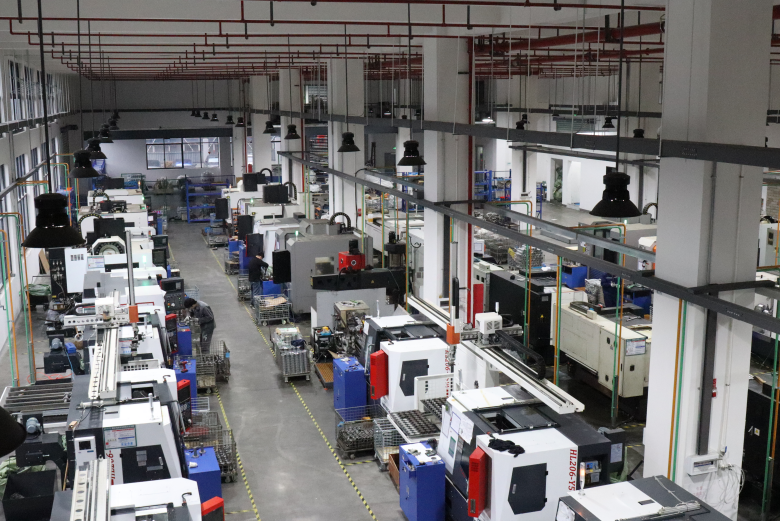
ODE machining center workshop supporting hydraulic component production for rescue tools and power units.
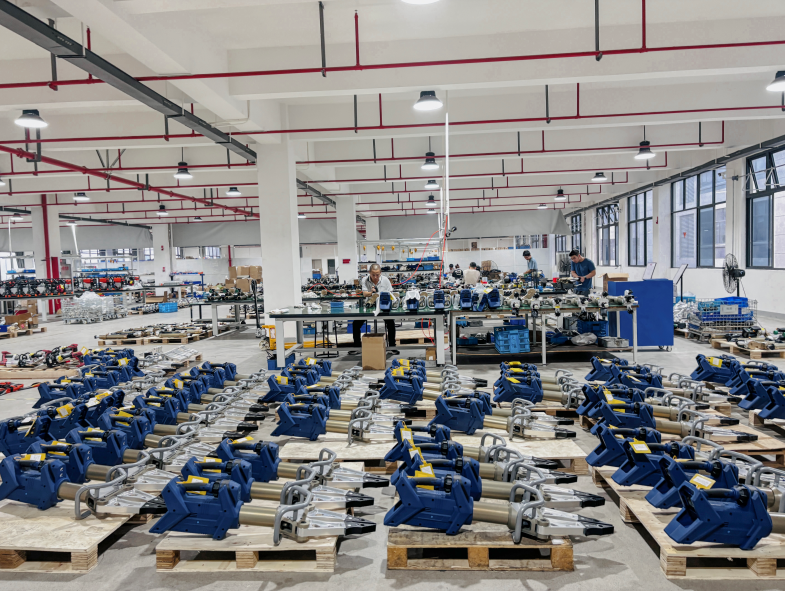
ODE factory warehouse for hydraulic rescue tool sets and spare components.
FAQ
Which certification should buyers confirm for hydraulic rescue tools used in long-term fleet programs?
ODE states that it has CE certification and supports export; the company FAQ also lists CE and ISO9001. For Europe, EN 13204:2016 specifies safety and performance requirements for double-acting hydraulic rescue tools, while DIN lists EN 13204:2025 as a newer edition replacing the 2016 edition. Buyers should request the applicable edition, Declaration of Conformity, and product-specific test documentation before approval.
What pump parameters should be confirmed before matching a pump to a hydraulic cutter, spreader, combi tool, or ram?
Confirm rated working pressure, flow at high and low pressure, number of outputs, hose length and connection, hydraulic oil tank volume, engine power and speed, and weight. For example, ODE MDP220 is rated ≥72 MPa with high pressure/high speed flow 0.84/1.65 L/min and low pressure/high speed flow 3.5/6.95 L/min; P620SGB is rated 630 bar × 2 with 2*0.66 L/min and 2*2.0 L/min and two sets of 5 m hoses. Match these values to the tool's rated pressure and flow requirement.
How does order quantity affect pricing and long-term supply terms?
ODE states that price discount eligibility depends on order quantity. For long-term programs, buyers should confirm volume bands, OEM scope, spare-parts list, and delivery schedule in the quotation. ODE states that OEM service is welcomed and that, besides its own factory in Zhejiang, it cooperates with other factories.
Can buyers request a sample before committing to a fleet order?
Yes. ODE states that samples can be sent, with the carrier charge on the buyer's side. A sample should be tested against the intended tool, pump, hose, and ram combination, and the test record should be used to confirm flow, pressure, and operator fit before a bulk order.
How should buyers evaluate long-term spare parts and warranty support for hydraulic rescue tools?
Ask for a written spare-parts list, wear-part availability, service response process, warranty terms, and the name of the responsible service contact. ODE lists contact channels including rfq@ode119.com and WhatsApp +86 135-8886-7391. Because warranty periods and spare-parts policies are not stated in the supplied specification, confirm them in the quotation or supply agreement. To start a matching review, send the tool models, pump model, required flow and pressure, and preferred hose length to ODE for a sample or quote request.
Conclusion: Match the Circuit, Flow, and Stroke to the Task
The single vs double output engine pump decision should follow the task. A single output engine pump is the cleaner choice when one tool runs at a time and hose simplicity matters. A double output engine pump or heavy duty double output power unit is relevant when two tools must be connected, but the buyer must confirm pressure compatibility and simultaneous flow. The MDP220 is listed as a double output engine pump with ≥72 MPa rated pressure and a double-flow pressure-boosting function. The P620SGB is a heavy duty double output power unit with 630 bar × 2, two outputs, and two 5 m hoses; its pressure rating must be checked against 72 MPa tools before specification.
The ram decision should follow the stroke and force envelope. A standard bi-directional ram remains appropriate when one stage provides enough travel and force. A 2-stage ram is the better technical choice when the lift needs a longer reach or a staged force profile. R322-E provides 140 kN first-stage force, 70 kN second-stage force, 400 mm and 395 mm strokes, and 1385 mm extension height. R522-L provides 275 kN first-stage force, 140 kN second-stage force, level 1 lifting height 935 mm, and level 2 lifting height 1285 mm.
Before a fleet order, confirm the applicable EN 13204 edition, product-specific conformity evidence, pump-to-tool pressure compatibility, outlet count, hose length, oil tank volume, spare-parts list, warranty terms, and delivery schedule. ODE states that OEM service is welcomed, that price discount eligibility depends on order quantity, and that samples can be sent with the carrier charge on the buyer's side.
Next step: match your pump, ram, cutter, spreader, and combi tool as one system.
Send your tool models, required pressure and flow, hose length, and target market to ODE for a sample or quote review.
Email: rfq@ode119.com | WhatsApp: +86 135-8886-7391 | Website: www.odetools.com
Download the ODE company brochure: ODE company brochure (PDF)
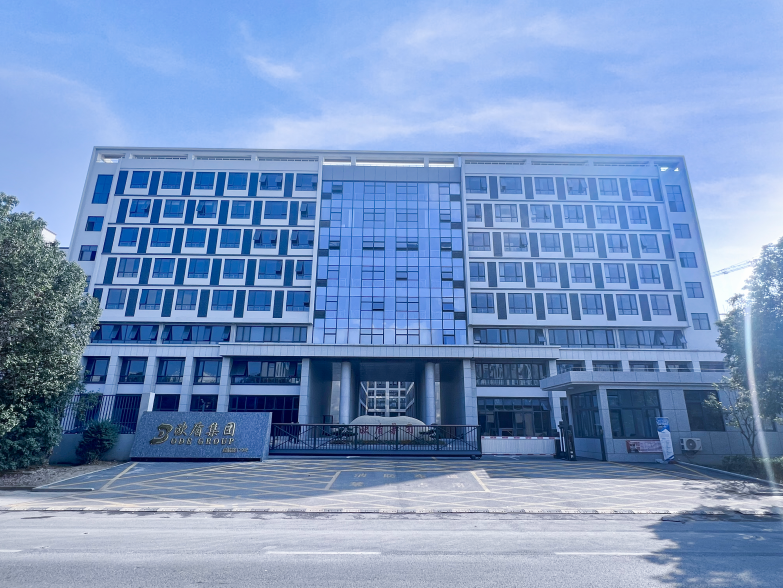
ODE Deqing factory gate, Zhejiang, China. Contact ODE for pump and ram matching support.
Have Questions or Need More Details?
Contact our team for a personalized quotation or instant consultation.
Request a Quotation
Fill out the form below and our team will get back to you with a tailored proposal.
WhatsApp Direct Chat
Prefer to chat in real-time? Message us on WhatsApp for instant assistance & quick answers.
- Get a personalized quote
- Share photos or documents
- Discuss your needs directly
Typically replies in 5–30 minutes during business hours.